

Epworth Hospital
Introduction
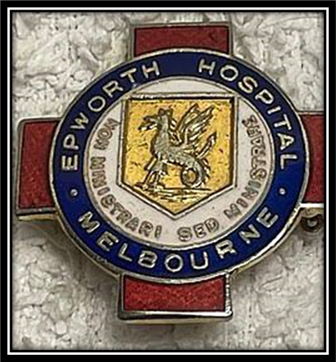
Epworth Health Care, based in Melbourne, is the largest, not-for-profit, private hospital group in the state of Victoria (see: https://www.epworth.org.au/about-us).
The first Epworth hospital was established by the Methodist Church, in 1920, as a 25-bed facility in the inner suburb of Richmond. It was named after the village of Epworth, in England, where John Wesley, the founder of Methodism, was born (see: https://en.wikipedia.org/wiki/Epworth_HealthCare).
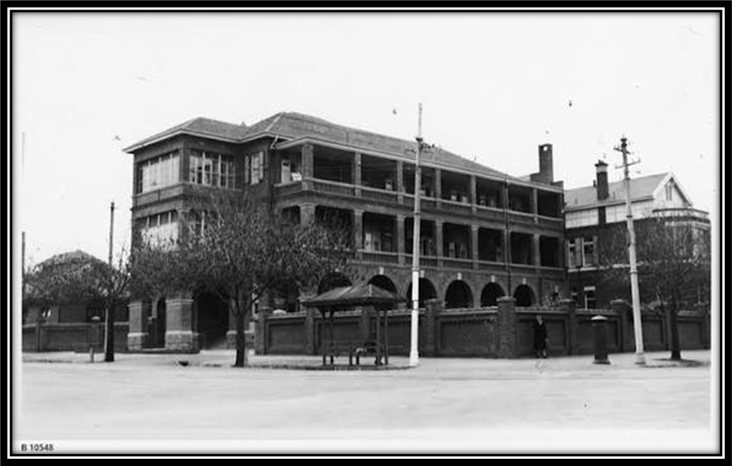
Epworth Health Care has expanded significantly over the last 30 years, incorporating the Salvation Army Bethesda hospital in 1998. Other hospitals and medical centers were subsequently acquired, including the Freemasons Hospital. Annual patient operations today exceed 150,000. The group employs around 8,000 staff over 4,800 of whom are doctors.
Cardiology at Epworth
Cardiology is the branch of medicine that addresses heart and cardio-vascular disorders. In 1982, Epworth Hospital established the first cardiology center in a private hospital in Australia. It was led by renowned specialist, Graham Sloman, who invited Dr Lim Yean Leng to join his pioneering team (see: https://www.abc.net.au/chinese/2024-07-29/lim-yean-leng-life-contribution-development-of-medicine-au-ch-sg/104140850).
Doctor Lim was born in Singapore in 1948, where, in 1965, he saw his father die, after a short severe illness, at the age of 43. This experience confirmed his ambition to study medicine. Shortly after his father died, he was awarded a Colombo Plan scholarship to study medicine at Monash University in Melbourne. His two older brothers had previously won Colombo Plan scholarships to study medicine in Australia at Adelaide University and Monash University (see: https://www.worldscientific.com/worldscibooks/10.1142/u014?srsltid=AU7gw4WcaNiMREc2j5o7h5SvnE7x6destosDxq2Pk_RZaLrTLNxm3wZr#t=aboutBook).
In 1986, after acting as an interpreter for leading Chinese cardiologists visiting the Alfred Hospital in Melbourne, Dr Lim perceived an acute need for a cardiac surgery training program for Chinese doctors. In 1988, the first group of Chinese interventional cardiologists arrived at the Epworth Hospital in Melbourne for training (see: https://pubmed.ncbi.nlm.nih.gov/23035685/).
Offshore Linkages
Subsequently, Dr Lim and other leading physicians from Australia led teams to train doctors in cardiovascular surgery in Beijing, Shanghai, Guangzhou and other cities in China.
In 1994 Dr Lim became the first director of Singapore’s new National Heart Centre and in 1995, he became the founding dean (and professor) of the new Xiamen University School of Medicine. He later returned to Melbourne to serve as professor and head of the Cardiovascular Treatment Center at the University of Melbourne Western Hospital (see: https://www.abc.net.au/chinese/2024-07-29/lim-yean-leng-life-contribution-development-of-medicine-au-ch-sg/104140850).
Two-way Engagement
The medical cooperative linkage between the Epworth Hospital and China has continued to strengthen over the last several decades. A recent presentation hosted by the Epworth Medical Foundation explained how the shared medical learning experience is now two-way: Australian doctors are increasingly learning new cardiological approaches and techniques from China.
Associate-Professor Kean Soon, born in Malaysia, is a multi-lingual, cardiac specialist based at the Epworth Hospital. He received his training as an interventional cardiologist in Melbourne and Adelaide (see: https://www.epworth.org.au/our-specialists/aprof-kean-soon). He recently reported on an Australian team visit to leading cardiac centers in China, including the West China Hospital (Huaxiyiyuan) at Sichuan University in Chengdu.
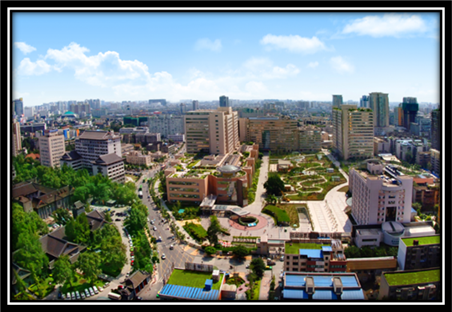
By Australian standards, this is an exceptionally large, modern and diverse medical facility with around 5,000 beds (https://www.wchscu.cn/About_Us.html#contact).
Specialized training, drawing on China’s now very wide experience in the development of new methods for dealing with serious heart conditions, was provided for the visiting team (see:
). The group also visited Changhai Hospital in Shanghai. As a result of this extended, Australian team visit, insights were grained into the latest Chinese advances in catheter-based interventions related to heart valves.
China’s notable advances in medical science are of immense value to China and also to the world. The World Economic Forum recently explained how China’s next global economic success story may be healthcare (see: https://www.weforum.org/stories/all/china-healthcare-success-story/). In a careful, critical review, Brian Owens, writing in Nature, said, “increasing evidence suggests that the geographical centre of medical research might be moving, as the amount and quality of research produced by China’s research hospitals rises, and the United States’ grip on the sector loosens” (see: https://www.nature.com/articles/d41586-025-03094-5).
A recent online article also provides (relying on what the research facts indicate) an informed, critical assessment of China’s general rise as a science power (see:

).
Cooperation Trumps Foolishness
Meanwhile, broad disaffection with the way current political systems function is one primary factor driving the growing impact of resentment-politics across a number of Western jurisdictions (see: https://en.wikipedia.org/wiki/Politics_of_resentment ). The concurrent rise of China - as the West-is-best narrative is ruined by the West itself – is another (see: https://theconversation.com/why-the-wests-resentment-of-china-is-so-misguided-221919).

In Australia, anti-foreigner and anti-immigration political momentum (exploiting widespread tangible grievances) is spearheaded by the billionaire-supported, One Nation political party. Some federal election polls have put One Nation ahead of the governing Labor Party and the conservative, official opposition (see: https://www.nine.com.au/australia-news/newspoll-september-labor-falls-to-near-record-low-20260921-p60z1g.html).
One Nation’s embrace of a remarkably reckless version of the “China threat” narrative was vividly captured when Pauline Hanson, the One Nation leader, told the Senate in 2024 that Australia’s One China policy was “a polite farce that does not reflect reality” and that “Australia and the rest of the world should recognize Taiwan for the independent sovereign nation it has effectively been since the 1950s,” adding that, “the [Chinese] regime’s highest priority is to capture Taiwan, most likely by force, and turn that beautiful island nation of 24 million free people into another oppressed, polluted, communist hellhole” (see: https://www.abc.net.au/news/2026-06-21/one-nation-foreign-policy-revealed/106822090).
Fortunately, despite these current, opportunistic spasms of electoral zealotry, positive, long-term Sino-Australian partnerships continue to flourish beyond the menacing, narrow world of resentment politics.
In 1988, leading Chinese medical professionals first arrived in Melbourne for training in cardiac medicine at the Epworth hospital. Almost forty years later, Australian specialists are visiting Chengdu, Shanghai and other cities, to secure training in the latest, leading cardiac treatments developed in China. What a splendid outcome.

In one important way, highly trained medical specialists are rather like leading classical musicians: they both recognize the resonant skill of others in their profession, regardless of where they may come from, based on critical performance evaluation. Australia’s more fevered politicians may, unsurprisingly, fail to learn from this sort of, real-life, fundamental understanding. Even in that case. this understanding still helps to emphasize their dismal foolishness.