


This article may be reproduced in full or in part with appropriate attribution.
The Nature of Optimism
A former senior state politician in Victoria, Australia, Victor Perton, now runs the Centre for Optimism in Melbourne. This is an interesting, constructive project. The center’s Website explains that it helps leaders, teams, and organizations unlock optimism, strengthen culture, and build better futures.
A significant philosophical debate about the essential nature of optimism unfolded during the 18th century. Voltaire took exception to Leibnitz’s view that contemporary humanity existed in “the best of all possible worlds”. Voltaire satirized this view using his literary creation, Professor Pangloss, who featured in the novella, Candide. Professor Pangloss radiated gushing optimism no matter how bleak the visible, immediate reality.

Voltaire maintained that insistent Panglossian sunniness was delusional, distracting and thus significantly dangerous. One had to accept life with all it manifest challenges and calamities and then focus on continuous, productive practical action: “we must cultivate our garden”.

Chinese Problems
It is now almost 50 years since China’s reform and opening up policy was implemented by Deng Xiaoping. The nominal GDP of the People’s Republic of China (PRC) was approximately US$216 billion in 1978. By 2025 was it around US $18.7 trillion USD. These figures indicate a raw, 86-fold expansion of China’s economy over this period. According to CSIS, a leading US think tank, China has risen to become the world’s second largest economy in nominal GDP terms today and the largest global economy measured by Purchasing Power Parity (PPP) (see: https://chinapower.csis.org/tracker/china-gdp/).
So far so good. But the challenges confronting China remain immense.
Beijing faces an increasing level of intense geopolitical pushback against China’s rise, especially from much of the Global West, led by Washington. China remains a vast country of 1.4 billion people where unequal development and continuing impoverishment are clear even though abject poverty has been essentially eliminated: the ongoing governance challenges are huge.
China, dominated ethnically by Han Chinese, continues to be home to over 50 ethnic minorities, the most prominent being the Tibetan minority and the Uygur minority. Moreover, China’s population is now measurably shrinking and ageing. Internal economic problems related to a major, deflated housing bubble, increased debt and youth unemployment - and the thorny lying flat syndrome (https://www.bbc.com/news/business-60353916) - significantly augment this adverse profile.
Chinese Optimism
Benjamin Cain argued, in 2021, that:
China is arguably the most pragmatic civilization in history – one that eschews fantasies that foster false optimism. Alternatively, a realistic society might hew more closely to the natural truth, putting a premium on accepting and working with the harsh facts. While the cynical leaders of many polytheistic and monotheistic societies likely chose the former path, China chose the latter (see: https://medium.com/discourse/why-chinas-pragmatism-should-haunt-the-west-3f835bfd0801).
Several Polish scholars, writing in 2008, explained that:
The Western tradition glorified war and conquest and warriors constituted their ruling elite, whereas the Confucian tradition that shaped Chinese civilization detested violence and raised scholar-officials to the rank of the ruling elite (see: https://instytutkonfucjusza.uj.edu.pl/aktualnosci/-/journal_content/56_INSTANCE_8W44ecVLz8ym/30304575/31098435).
Unsurprisingly, the dominant version of Chinese optimism is not Panglossian. Neither is it remotely like the fervently marketed American optimism presently found on the White House website which tells us each day how the US has: “surged into a new era of record-setting growth” (see:
https://www.whitehouse.gov/
).

Instead, contemporary, primary Chinese optimism is actively based on observed, ongoing performance improvements – especially those seen over the last half-century.
Some Performance Improvements
Over this period, the PRC has continued to elevate itself scientifically and economically:
The Economist confirmed in 2024 that China is now a scientific superpower.
Quoting an extended study by the Australian Strategic Policy Institute, the Guardian argued in March, 2023 that, “China is leading the US in the technology race in all but a few fields”
In 2022, the World Bank confirmed that China had lifted almost 800 million people out of poverty, contributing close to three-quarters of the total global reduction in the number of people living in extreme poverty (see: https://www.worldbank.org/en/news/press-release/2022/04/01/lifting-800-million-people-out-of-poverty-new-report-looks-at-lessons-from-china-s-experience).
China’s domination of global manufacturing includes: ship-building, vehicles, batteries, solar panels, rare earth elements, green-technology generally, the widest range of household and recreational items plus medical necessities. Its building of all forms of transport and information infrastructure now eclipses comparable work currently being done across all of the Global West.
Even in Australia, where the China Threat drumbeat is tediously persistent, massive Chinese TBMs (Tunnel Boring Machines) dominate primary infrastructure projects in Melbourne, Sydney and the Snowy Mountains (see: https://interestingengineering.com/innovation/world-largest-manufacturer-tunnel-boring-machines) .
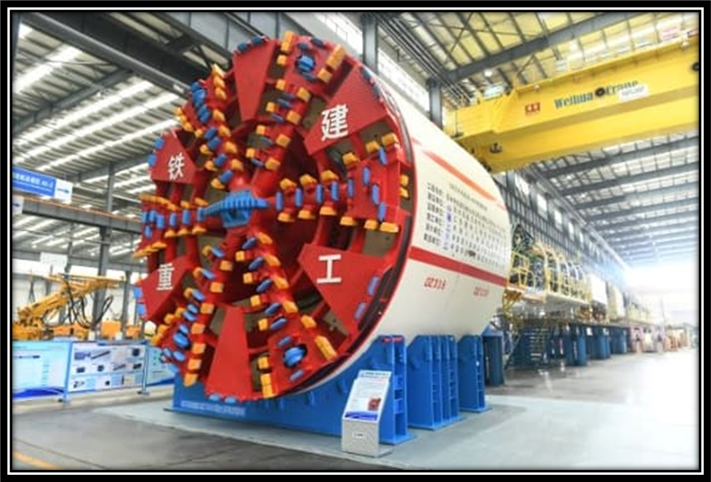
This can-do-prowess, in turn, underpins the prominent global achievements of China’s trillion-dollar Belt and Road Initiative (BRI). It has not all been plain sailing for the BRI - but it is still far ahead, in terms of achievements, compared to its pallid Western imitators according to a detailed report from Griffith University in Australia (see: https://blogs.griffith.edu.au/asiainsights/regional-outlook-ten-years-of-chinas-belt-and-road-initiative-bri-evolution-and-the-road-ahead/)
China has also become a ground-breaking leader in space exploration, according to CNN.
Examples like these sustain China’s durable, pragmatic optimism. Chinese people feel this optimism. The PRC government, however, largely avoids brash, mass-marketing thereof. An increasing number of convincing Chinese TV documentaries do tell the world about these developments – but they largely let the facts speak for themselves.
Summary
The challenges facing China remain immense – see above. But they are measurably less intractable than those facing the intensely polarized US and much of the Global West (see: https://www.weforum.org/stories/2015/05/how-political-polarisation-is-crippling-western-democracies/). .
Internal political tensions persist but China’s phenomenal capacity to lift productivity constantly by investing, most of all, in its greatest natural resource, its people, has enabled it to manage these anxieties – never perfectly – but progressively and effectively. Meanwhile, the CPC still plainly sets the pivotal governing and confining rules for societal operation and stipulates and enforces the redlines.
But the prodigious lift in available resources has been substantially applied to improve the general livelihood experience across the entire country. The Lancet reported in 2023 that:
China has made tremendous progress in improving health over the past few decades. Increases in life expectancy might be associated with declines in fertility and reductions in infant mortality, and recent increases might be associated with declines in mortality from cardiovascular disease, chronic respiratory disease, and tumours, although they remain the leading causes of death in China. These declines in mortality might be linked to recent public health developments, such as increased public funding for health, improved access to health care and decreased health inequality, increased education level, and improvements in nutritional status (see: https://www.thelancet.com/journals/lanpub/article/PIIS2468-2667(22)00338-3/fulltext).
These longevity improvements are most pronounced in China’s major coastal cities but they are also evident across all of China, not least in Tibet and Xinjiang where life expectancy has more than doubled (to over 70) since the establishment of the PRC in 1949 (see: https://www.globaltimes.cn/page/202509/1343976.shtml).
In 2020, Harvard’s Ash Centre, which has been polling the popularity of the CPC government in Beijing since 2003, found basic satisfaction levels remained close to 90% across all these surveys (see: https://ash.harvard.edu/wp-content/uploads/2024/02/final_policy_brief_7.6.2020.pdf).
Other American academics have questioned the validity of these Ash Centre findings – based, however, on a single alternative survey, compared to the Ash Centre’s multi-decade surveys (see: https://eastasiaforum.org/2024/10/29/data-shows-the-chinese-government-is-less-popular-than-state-media-makes-it-seem/).
Why Chinese Optimism Matters
For over four decades, China has witnessed how so many primary challenges, across the entire country, have been effectively addressed, applying an unrelenting, lets go to work ethos – in stark contrast to America’s let’s go to war default, problem-solving mode (see: https://johnmenadue.com/post/2024/08/shocking-news-china-is-kicking-more-global-goals/).
The resulting, widespread pragmatic optimism underpins the long-term, adaptive development of essential national planning. It also undergirds the uncommon level of impulse control Beijing has typically demonstrated in the post-Mao era.
Without under-estimating intense local, regional and geopolitical challenges, China maintains a lucid understanding that the future can be made better than the past by applying immense, collective intelligent effort. The priority is, of course, to create a better future for China but Beijing understands in a way Washington does not, that the more the world collectively improves, the better this is for China.
Reunification with Taiwan is, of course, a central long-term mission for Beijing. But once again, restraint is a fundamental to Beijing’s approach with respect to this fraught project. In June, 2025, Sherry Chen put it this way:
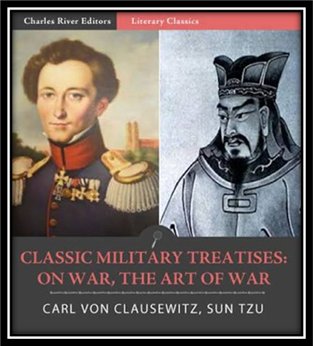
In contrast, Carl von Clausewitz’s On War frames conflict as a raw, violent extension of politics. He famously called war “the continuation of politics by other means,” arguing that when talks fail, force takes over. Clausewitz saw war as a tool to break the enemy’s will, with no real limit to how far violence might escalate. It’s this hard-edged worldview that many Western analysts use to interpret Xi Jinping’s calls for “national rejuvenation” and “reunification” — reading them as possible signs that Beijing is laying the groundwork for military action against Taiwan.
However, Xi Jinping leans toward a Sun Tzu–style strategy of restraint and environmental shaping. While he has not ruled out using force to take Taiwan, he consistently stops short of pulling the trigger. It is not because he lacks the capability, but because preemptive action goes against his deeper goal of winning without fighting. Rather than launching an invasion, Xi is playing the long game. He is shifting the regional balance of power, applying psychological pressure, and building economic ties that leave Taiwan increasingly isolated and dependent. His hope is that the island will eventually choose unification on Beijing’s terms, with no bullets required (see: https://southchinaseanewswire.com/why-doesnt-xi-jinping-launch-a-hot-war-over-taiwan/).
Ultimately, the reason Chinese optimism is so fundamentally good for the world, is because of the way it has played a primary role in the creation of a new superpower:
· That is distinctly averse to enforcing its will by going to war; while
· Steadily leading by example in this regard (https://www.chinadailyhk.com/hk/article/626357)
This deep appreciation of the exceptional value of peace draws on lessons offered by: the extraordinary rise of China; the horrors of violent conflict evident in in the Chinese Civil War and the terrible Japanese invasion; and the turmoil of the Cultural Revolution. It is also embedded in a continuing understanding of the profound lessons offered, over 2000 years ago, by China’s gravely damaging Warring States Period (see: https://thediplomat.com/2013/12/why-chinese-study-the-warring-states-period/).
Watching, today, how the Global West has once more sunk back into the immensely destructive warfare habits (dating back many centuries) it brought to a peak in the first half of the 20th century, confirms, for Beijing, the wisdom of China’s dominant commitment to peaceful development – and conflict resolution (see: https://johnmenadue.com/post/2025/02/the-lawless-west/). .
The world can be genuinely thankful that no nation in history has ever confirmed, so swiftly and on such a scale, Voltaire’s penetrating maxim that we must, above all, cultivate our own garden.
Postscript
Unsurprisingly, the extraordinary rise of China hasn’t deterred Western doomsayers from trying to pillory this elevation by repeatedly emphasizing their China Threat narrative. But when you look at the unfolding reality. it transpires they are also pushing back against Winston Churchill who said, in 1925:
“You must look at facts because they look at you”, adding, some years later, that “Truth is incontrovertible. Panic may resent it. Ignorance may deride it. Malice may distort it. But there it is.”