

A Global Challenge
According to the World Meteorological Institute, Western Europe recently experienced its hottest ever June-July period, as similar record-breaking hot weather advanced across North America and Asia (see: https://wmo.int/media/news/record-breaking-heat-and-extreme-weather-continue).

These extreme weather figures build on an alarming trend evident for some years, widely attributed to climate change.
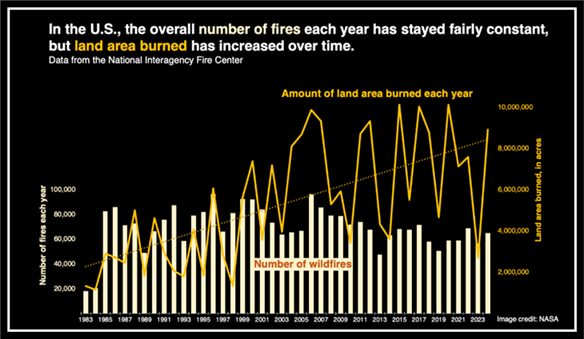
A conspicuous consequence of these grim weather-pattern changes, according to NASA, has been the growth in the recorded frequency and intensity of significant wildfires globally. This report stressed that, “extreme wildfire activity has more than doubled worldwide over a 21-year span” (see: https://science.nasa.gov/earth/explore/wildfires-and-climate-change/).
Further Significant Consequences
Intense urban-area fires have also been evident this year in Spain, France, Greece and Britain, for example, forcing massive evacuations of residents and tourists (see: https://www.theguardian.com/world/2026/aug/14/arrested-suspicion-starting-wildfires-europe-france).
In January, 2025, significant areas of Los Angeles were severely affected by wildfires spilling over into metropolitan districts. These fires, “claimed at least 29 lives, forced over 200,000 evacuations, and destroyed more than 18,000 structures” according to NASA (see: https://www.earthdata.nasa.gov/dashboard/stories/la-fires).

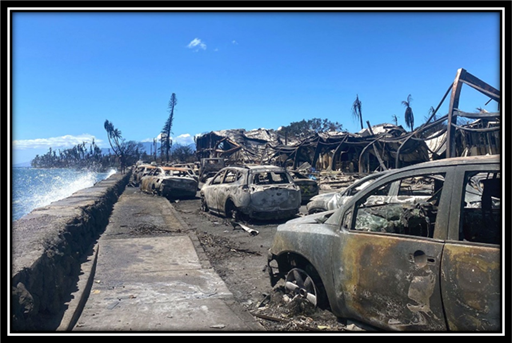
In August, 2023, over 100 people perished amid intense urban destruction caused by a wildfire that swept into the town of Lahaina on Maui Island in Hawaii. This was the deadliest blaze in modern American history according to one detailed assessment (see: https://www.wired.com/story/cities-arent-supposed-to-burn-like-this-anymore-especially-lahaina/).
Organized firefighting is immensely demanding and the burden placed on firefighting services, globally, now looks set to be amplified significantly. It is crucial for fire-fighters to have access to a generous supply of high-quality, firefighting hardware – especially fire trucks - in order to contain fires and secure least harmful outcomes.
CBS reported, when the devastating Los Angeles fires broke out in early January, 2025, that the Los Angeles Fire Department (LAFD) had 252 mobile fire appliances and 217 ambulances available for use. At the same time, more than 100 LAFD trucks, engines and ambulances were out of service and in need of repair. Lack of trained mechanics and spare parts help explain this grim position (see: https://www.cbsnews.com/news/investgation-lafd-data-out-of-service-vehicles-palisades-fire/).

An American Answer
Meanwhile, according to the New York Times, three Wall Street private equity firms now largely control “Fire engine manufacturing [and] around the country, prices have soared, and orders can take years to fulfil” (see: https://www.nytimes.com/2025/02/17/us/fire-engines-shortage-private-equity.html).

In July this year, a bi-partisan congressional group summarized the position in this way: “Rampant consolidation in the fire truck manufacturing industry is undermining public safety, squeezing fire departments’ budgets, and forcing taxpayers to bear the consequences.” They also said that: fire truck prices have doubled over the last decade, dominant fire truck manufacturers have restricted supply by closing their own manufacturing facilities, fire departments are now facing delivery delays of up to five years, and higher prices and longer delivery times for fire trucks have prevented fire departments from replacing aging trucks, depriving fire fighters of the essential equipment required to work safely and effectively (see: https://www.warren.senate.gov/newsroom/press-releases/warren-banks-file-bipartisan-bicameral-resolution-directing-the-ftc-to-investigate-corporate-roll-ups-of-firetruck-manufacturers/).
For a penetrating analysis of this grim reality see: Chinese factories build fire trucks for $400,000 in six weeks. In the US it’s $2 million in 4 years:
This awful problem, where the provision of vital public emergency vehicles is being milked to maximize private profits unsurprisingly, appears to be most severe in the US. But around the world, the challenge of delivering such vehicles cost-effectively is plain, especially in the Global West, where maximum prices for the most sophisticated units exceed a million pounds in the UK and a million dollars in Australia, for example.
And these acute delivery delays and inflated cost problems are set to grow more serious over coming years.
An Alternative Answer
However, a significant remedy is already evident. It is not a perfect solution (nothing ever is). But a robustly competitive, alternative source of supply now exists.
Rapidly modernizing and urbanizing China, with its 1.4 billion population, has more need than almost any country of seriously enlarged access to modern fire fighting equipment, including all sorts of fire trucks, to cover rural and urban areas and airports, for example.

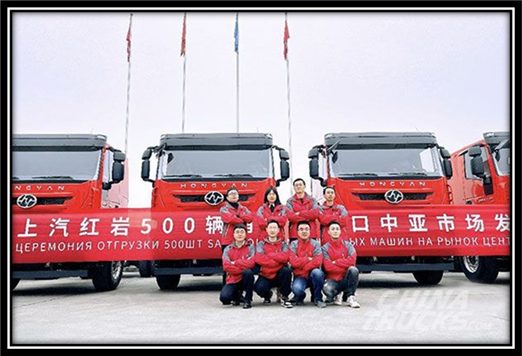
China currently produces over 5,000 fire trucks annually (some estimates are significantly higher). These, as in the US, are produced by specialist builders including, Chengli Special Automobile and Sichuan Chuanxiao. China also still imports some specialized fire fighting vehicles (see: https://www.chinaspv.com/statistics/5333.html).
Fortune Insights recently confirmed that Europe and the US remain the leading global builders of mobile firefighting equipment. This global market, which is currently around US$12 billion per annum, is set to rise to over US$17 billion by 2034 (see: https://www.fortunebusinessinsights.com/fire-trucks-market-104087).
Last year Reuters reported that the most expensive US built fire trucks cost more than US$2 million with very long delivery times of up to four years (see: https://www.reuters.com/sustainability/boards-policy-regulation/fire-truck-prices-hit-2-million-us-firefighters-demand-an-antitrust-probe-2025-05-13/) According to a separate investigation, Chinese built equivalent fire trucks are now around 75% cheaper with much more rapid delivery times. In China, a regular fire truck it can be built within 6 weeks (see:
).
This is highly specialized equipment, of course, that requires highly specialized maintenance. But certain Chinese builders are already providing this. You can purchase “off the peg” or they can build on a foreign (European or Japanese) heavy-truck chassis if you wish and long-term after sales service, including global onsite service, is also offered (see: https://www.csctrucks.com/info/csctruck-fire-truck-your-ideal-chinese-fire-t-102866951.html)
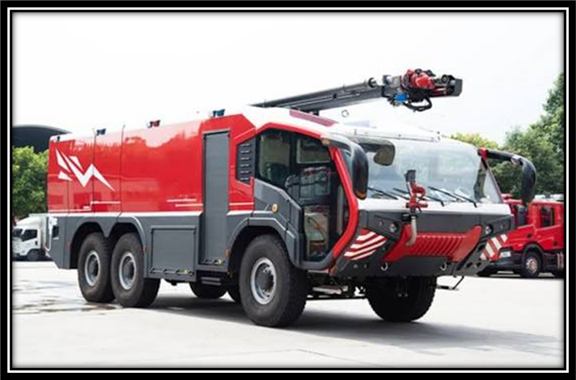
Moreover, comprehensive, online guides comparing features and prices are now available for those considering the purchase of a Chinese fire truck (see:
).
Apart from the tariff barriers which regularly apply, the importation of fire trucks into the EU and across the Global West is subject to enduring, complex regulatory regimes governing technical and safety standards and related matters. Long-term (especially EU and British) global suppliers are very well established.
Nevertheless, manufacturers of Chinese firefighting equipment have now begun serious collective marketing in the EU, with around 300 Chinese companies recently exhibiting at the Interschutz trade fair in Germany (see: https://asia.nikkei.com/economy/trade/chinese-firefighting-equipment-makers-target-untapped-eu-market).

In fact, Chinese manufacturers have an impressive record of adapting to varied compliance frameworks to secure and maintain foreign market access (see: https://www.scmp.com/economy/article/3354060/chinese-companies-hungary-scramble-adjust-post-orban-era). This is just one factor that helps explain how China has so swiftly risen to become the world’s top car exporter (see: https://www.automotivemanufacturingsolutions.com/strategy/china-overtakes-japan-as-global-vehicle-export-leader/2621926)
Meanwhile, in the substantial, growing Global South markets Chinese fire trucks (and a wide range of firefighting equipment) are more readily considered. Buyers in these markets are far less burdened by “West-is-best” doctrines. They are focused on performance and value for money. These are early days, but Kazakhstan and Pakistan have already imported several hundred Chinese fire trucks while other export markets include Papua New Guinea and the Dominican Republic (see: https://m.chinatrucks.org/news/10365.html).
As it happens, Nikkei, Japan’s primary financial media outlet, recently noted how China is already a significant supplier of dependable parts and components to leading manufacturers of firefighting vehicles and related equipment in the EU, Britain and the US. Certain Chinese fire trucks also use joint-venture, European engines built in China and other imported components.
Looking Forward
China is a relative newcomer to the task of manufacturing complete fire trucks for global export. Emergency vehicles, especially, need to be thoroughly tested in the field under high-stress conditions, to establish confidence in their essential build quality. But China has been producing these vital vehicles for local use over an extended period. They have accordingly, been extensively tested within the world’s largest single, relevant market. And they are now increasingly being tested in certain export markets.
Next, electric-powered fire trucks are now being delivered. And China is well-placed to lead this development significantly. Ravi Gadepelli, an Indian transportation specialist, recently argued that: “It is very likely that the Chinse e-truck manufacturers will disrupt the global freight truck market” (see: https://restofworld.org/2025/china-electric-freight-trucks/).
We can expect a global escalation in the demand for fairly priced, robustly tested fire fighting vehicles and equipment in the future. America has provided a profit obsessed example of the worst sort of way to meet that demand. China may well be poised to provide a substantial level of viably priced, high-quality firefighting vehicles to meet this crucial, world-wide demand over the next several decades.