


Books and the Sea
Almost 100 years ago, Evelyn Waugh explained that:
“It has always seemed odd to me that anyone, for any reason, should choose to travel by land when he can go by water.”
He said this in his first travel book, Labels, published in 1930. Waugh was in his late 20s at the time and still married to his first wife, also called Evelyn. The book shares, with customary engagement, distinctive reflections on the places they visited during an extended Mediterranean cruise, arranged in 1929.

Coincidentally, as I read this collection of Waugh’s travel-writing, I completed reading The Cat’s Table, an evocative sea-linked novel by Michael Ondaatje, published in 2011.
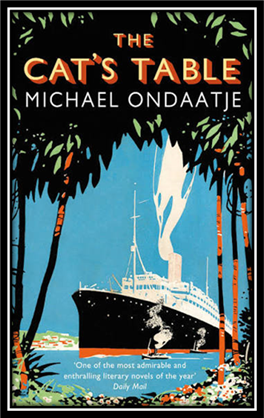
This is a very good book. It steadily leads the reader into a series of penetrating reflections on human relationships. Some are seriously dark but their unfolding is resourcefully managed.
At the heart of the novel is a sea voyage, from Colombo to London, on an ocean liner - named the Oronsay in the book. The (mainly) first-person narrator is Michael, moving to England around 1953, at age 11, to reunite with his mother at Tilbury in several weeks. Michael is travelling Third Class. He is assigned seating in the dining room at the cat’s table, located farthest away from the captain’s table.
At this table he makes close friends with two other young boys travelling alone, adventurous Cassius and observant Ramadhin.
The book uses many short, focused chapters. These initially reveal how the three curious boys swiftly discover an entire, remarkable onboard world open to combined discovery. You know that is a grown-up, serious book but these early chapters bring to mind Richmal Crompton’s terrific “Just William” boys-adventure books published between 1922 and 1970. William is also (always) 11 as it happens (https://en.wikipedia.org/wiki/Just_William_(book_series).

The darker themes in The Cat’s Table emerge gradually. Their impact is underpinned by the boys’ early, comparatively innocent, intense on-board experiences. The initial, extended scene-setting is singularly effective in helping the reader feel what it must have been like travelling by ocean liner from the Far East to London around 1953.
The Significance of the Sea
This evocative impact is appreciably explained by the shared human understanding about the sea.
The outstanding British writer, Iris Murdoch, was awarded the Booker Prize for her 1978 novel, The Sea, The Sea. Murdoch stressed that her “imagination lives near the sea and under the sea” (see: https://en.wikipedia.org/wiki/Iris_Murdoch).

Subsequently, Miles Leeson, director of the Iris Murdoch Research Centre at the University of Chichester, said:
“Having lived all my life near to the sea I’m in the same mind as Murdoch; the importance of the sea to mental health and wellbeing, and to freeing the creative part of the mind. Iris Murdoch always wishes in her letters to friends that she could have a cottage by the sea and one wonders why she didn’t as she could have afforded one” (see: https://www.elsewhere-journal.com/blog/tag/The+Sea+The+Sea).
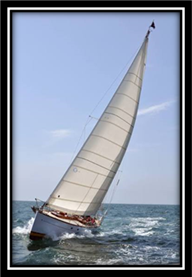
Those who participate in and love yachting understand this outlook (see: https://classic-sailing.com/article/why-we-love-traditional-sailing/).
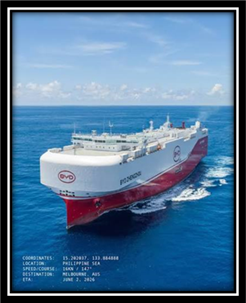
As do the several million merchant sailors most of whom, despite the adversities, would not opt to switch to onshore employment (see: https://imumate.in/blog/merchant-navy-life/).
A Sea Voyage
I confirmed some decades ago that my yachting abilities are unhelpfully meagre. And, regrettably, my sea-travelling experience has been altogether limited.
However, I discovered that I loved the sea from the moment I initially walked onto a sandy beach during the first ever seaside holiday I can recall, in the 1950s.
Then, in 1994, I completed a memorable trip by sea from Hong Kong to Shanghai. This voyage typically took around four days, depending on the weather. We encountered a serious storm one evening, which extended the duration.
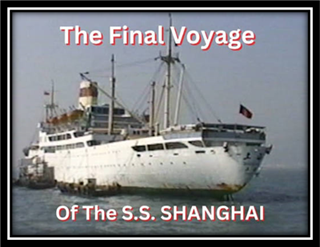
In the 1990s, the SS Shanghai (about 14,000 GRT (Gross Registered Tonnage)) was still running from Hong Kong to Shanghai. It was originally built, in Belgium, in 1957 and named the Baudouinville. It was renamed the Cathay after P&O acquired it, before being sold to China in 1975. It was very well proportioned. The ship was moored in Victoria Harbour, prior to departure, rather than dockside. Immediately you stepped from the tender through the entry door in the lower hull, you felt like you were entering another world (see:
).
Once at sea, you were surrounded by the same, far off horizon view in every direction. You felt connected to a special, wider world yet remarkably separated from your day-to-day world. There was a ship to explore and passengers to meet - quite a lot of watchable card-playing happened. The food was simple but fresh and ample including a splendid abundance of freshly steamed small white buns.
I still cannot think of a better place to settle back with a good book. Even a mediocre book enjoyed a lift when being read in such circumstances. You could wander around feeling very relaxed, lazy even, yet at the same time you were actually doing something – going somewhere.
This is a personal impression, of course. Many, I know, find sea travel rather less enjoyable.
Conclusion
As a result of years of looking plus some planning combined with some good luck, I found a home – an apartment - with striking sea views about two decades ago. Those views make its modest size seem more expansive:
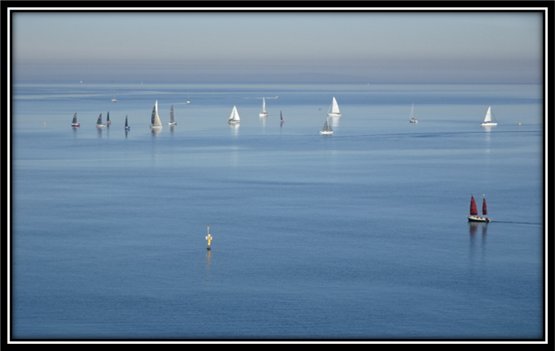
You need to pay for such views, of course, but they have, each day since, confirmed how this was money well spent.
Evelyn Waugh argued in Labels, that, during their commercial ascendency (dating back to 11th century), the Venetians “learned the laws of human life and toil from the ocean itself.” It is conceivable he was right.