

The quotation is drawn from an article published in 1710, entitled, “The Art of Political Lying,” written by Jonathan Swift, the author of Gulliver’s Travels (see: https://www.farmersfriendlincs.com/post/the-art-of-political-lying).

Democracy and the Demagogue
Over 170 years later, a prominent Oxford academic argued that the danger embodied in Swift’s aphorism was being amplified by the enlargement of the franchise in the UK as the movement towards electoral political reform gathered pace.
Albert Venn Dicey (1835 – 1922) was the Vinerian Professor of English Law at Oxford University, when he published his famous Introduction to the Study of the Law of the Constitution in 1885. This seminal work stated his understanding of and argued the fundamental importance of two pivotal principles of the operation of the (unwritten) British Constitution: Parliamentary Sovereignty and the Rule of Law (see: https://en.wikipedia.org/wiki/A._V._Dicey).

Dicey had supported early 19th century electoral reforms in the UK, designed to loosen the stultifying grip on political decision-making enjoyed by the landed gentry, inter alia, as the Industrial Revolution gathered pace. By 1885, these reforms meant that around 25% of the total adult population (male citizens qualified by certain property entitlements) were able to vote in general elections.
The Merriam-Webster dictionary defines a demagogue as “a political leader who appeals to popular prejudices and who makes false claims and promises in order to gain power.” Dicey was actively worried about the impact of demagogy. He argued that, without proper political education, the masses could easily be manipulated by partisan party machines, populist rhetoric, or revolutionary radicals.
Finetuning Democracy
In fact, shortly after Dicey’s death, by 1928, all adults, men and women were enfranchised in Britain. The sky did not fall.
Previously, Dicey had explained how he valued the adaptability of the British political system as it evolved and coped with many serious challenges.
One important explanatory safeguard (against unqualified demagogy) arising from this adaptability was the concept of the “Loyal (or Official) Opposition”. Sir John Hobhouse, a member of that Reform Party is recurrently credited with encapsulating this concept in a speech to Parliament, in 1826: Non-governing parties may oppose government policies while remaining entirely loyal to the constitution and to the King (see: https://en.wikipedia.org/wiki/John_Hobhouse,_1st_Baron_Broughton).
The fact that the Official Opposition acted not just as a platform for considered criticism but also as a de facto government-in-waiting helped embed adherence to this important political convention.
So far so good. Indeed, in 1947, when addressing the House of Commons as Leader of the Opposition, Winston Churchill famously argued how:
“Many forms of Government have been tried, and will be tried in this world of sin and woe. No one pretends that democracy is perfect or all-wise. Indeed, it has been said that democracy is the worst form of Government except for all those other forms that have been tried from time to time” (see: https://richardlangworth.com/worst-form-of-government).
More Finetuning
Yet, less than 10 years later, Churchill moved, as Prime Minister, to quarantine what he saw as a fresh, potent threat to the fair operation of British democracy.
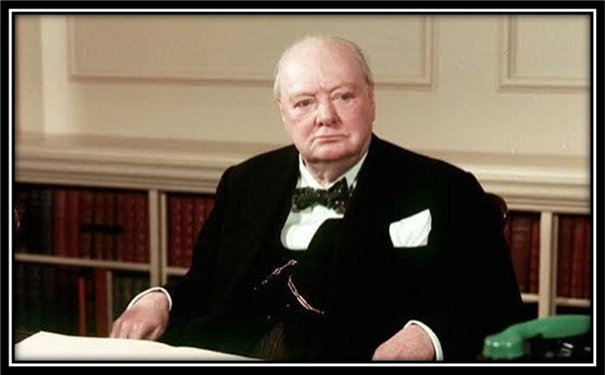
The passage of the Television Act (1954) by Churchill’s Government, established the Independent Television Network (ITV) - which introduced commercial television advertising to Britain. The passage of the Television Act not only created ITV: it also introduced a complete ban, which has continued to this day (and is replicated in Hong Kong) on paid political broadcast advertising. (see: http://adrianmonck.com/2008/12/british-political-tv-ads-courtesy-europe/).
The crux of the argument made in 1954 justifying this ban was that:
Television broadcasting was a particularly powerful and pervasive medium;
Without prohibition there would be an unacceptable danger that political debate would be distorted in favour of those wealthy enough to spend most on broadcast advertising; and
To achieve this democracy-protective outcome, the ban must apply to all political advertising regardless of content (see: http://adrianmonck.com/2008/12/british-political-tv-ads-courtesy-europe/).
This total ban on paid political broadcast advertising was finally challenged after passage of the UK Human Rights Act (1998), which gives local effect to the European Convention on Human Rights in the UK. Article 10 guarantees the right to freedom of expression and information.
In 2008 (in the Animal Defenders Case) the House of Lords found unanimously that the total ban was compatible with Article 10 as, in essence, the ban reinforced the democratic process by securing a more level field for political contestation. In particular, Baroness Hale stressed the need to avoid significant slanting of the political process arising from unwarranted political broadcast advocacy by wealthy segments in society, mentioning the US adversely as she did so. In 2013, the European Court of Human Rights confirmed that House of Lords decision, relying on the same sort of reasoning, by a 9 to 8 majority (see: https://en.wikipedia.org/wiki/Animal_Defenders_International_v_United_Kingdom).
A Very Different Approach
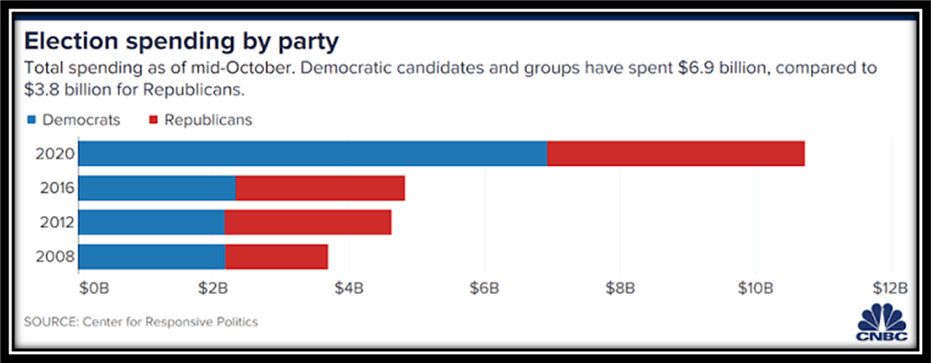
Meanwhile, in America in 2010, the Supreme Court of the United States (SCOTUS), in the Citizens United Case, reached an almost completely opposed, freedom of expression conclusion, when faced with a series of similar arguments. It struck down a number of relevant laws which only regulated campaign expenditure levels and how certain funds might be spent (that is, the laws did not impose any outright ban comparable to that applying in the UK) because, the Court said, this was necessary to ensure optimal (wealth-backed) democratic participation. The SCOTUS reasoning relied on the application of the First Amendment of the US Constitution, which by then guaranteed freedom of speech in semi-absolutist terms (see: https://en.wikipedia.org/wiki/Citizens_United_v._FEC).
And the result: According to the BBC, combined expenditure of the Democratic and Republican parties totalled around US$12 billion during the recent US Mid-Term (non-Presidential) Elections, with Elon Musk, alone, spending $446 million (see: https://www.bbc.com/news/articles/cqkgk64z7p58o).
The Mass Persuasion Revolution
Social media have been aptly defined as:
[W]ebsites and applications that are designed to allow people to share content quickly, efficiently, and in real-time (see: https://www.thebalancesmb.com/what-is-social-media-2890301).
Although the operation of social media in a basic form dates back some decades, it was not until soon after the turn of the century that it began to grow exponentially and to create a system where massive numbers of people could be contacted simultaneously, directly and very swiftly (see: https://smallbiztrends.com/2013/05/the-complete-history-of-social-media-infographic.html).
Collectively, social media is, today, a crucial new mass communication fixture comparable in impact to the coming of the telephone well over 100 years ago. It has rapidly become a pivotal zone of political discussion, disputation - and polarization.
At first hailed as a way to give a greater voice to the widest range of citizens, social media have progressively begun to look, also, like a gift from the gods to demagogues of all stripes. If you want to build zealous partisan support for particular, typically narrow, political causes, social media are tailor-made for such polarizing tasks.
This is because social media enables swift very low-cost communications - which often build on themselves through continuous re-sending - to vast numbers of recipients all at once. And it follows that billionaire dollars can supercharge this process (see: https://www.dw.com/en/how-tech-billionaires-threaten-democracy/video-79203991).
Eric Klinenberg, the author of a book analyzing social infrastructure argued, in 2019, that:
After the 2016 [US] election, Mark Zuckerberg [primary owner of Facebook] wrote a public letter claiming that Facebook would be a crucial social infrastructure that reinvigorates democracy. But since then we have learned that Facebook is doing much more to promote hate, propaganda and division than to generate the ‘meaningful communities’ that Zuckerberg promised (see: https://www.economist.com/open-future/2019/05/31/populism-can-be-beaten-back-by-libraries-really).
One of those whose social media work helped trigger the uprising in Egypt (and the Arab Spring) which led (in 2011) to the downfall of President Hosni Mubarak, later outlined the frightening levels of social media polarization which then followed:
The euphoria soon faded … We failed to build consensus, and the political struggle led to intense polarization. Social media only amplified the polarization by facilitating the spread of misinformation, rumours, echo chambers and hate speech. The environment was purely toxic. The online world became a battleground filled with trolls, lies, hate speech (see: https://www.scmp.com/comment/opinion/article/3026771/our-social-media-warriors-are-reaching-dead-end?module=perpetual_scroll_0&pgtype=article).
These accelerating adverse developments prompted the Rand Corporation, in the US, to argue, in 2018, that:
“Truth decay” posed a serious threat to evidence-based policy making. It defined “truth decay” as a combination of increasing disagreement about facts and analytical interpretations of facts and data; a blurring of the line between opinion and fact; the increasing relative volume and resulting influence of opinion and personal experience over fact; and declining trust in formerly respected sources of facts (see: https://www.theguardian.com/media/2019/jun/12/truth-decay-why-personal-values-are-poisoning-australians-news-consumption). .

Rescuing the Best of Western Democracy
An Australian case study.
John Menadue is an exceptionally experienced Australian commentator on public affairs. In 2013, he founded Pearls and Irritations (P&I), an influential online public policy journal (see: https://pearlsandirritations.com/precis/).
Prompted by the present, rapid rise in electoral popularity of the insistently inward-looking, One Nation Party, Menadue has – in a recent series of articles - provided a detailed examination of the falling trust in institutions and the growing sense of political alienation which, he argues, pervade the operation of the Australian political system, today:
Democracy is not only about free and fair elections. We need well-functioning institutions that are responsive to and serve all our citizens.
Freedom of speech is under challenge. Zionists want to close debate and discussion about the genocide of Palestinians. Our legacy media and governments follow. The right to protest is challenged by the premier of NSW. Foreign influence is rife, but governments have a very selective view on the subject. Foreign residents Rupert Murdoch, Donald Trump and Benjamin Netanyahu presumably don’t exercise influence!
Governments behave in ways that suggest they are only interested in us at election time. They fail to engage us in a serious ongoing conversation. Populist parties [like One Nation, led by Pauline Hanson] feed on a growing feeling that governments and politicians cannot be trusted (see: https://pearlsandirritations.com/post/2026/09/one-nation-and-the-trust-crisis-part-one-why-alienated-voters-are-turning-away/). .
Menadue’s diagnosis of primary causes is focused on the manifestly poor performance of the mainstream, Labor and Coalition (conservative) parties:
The causes of alienation are reasonably clear. Clear and firm political leadership is necessary so that the vacuum is not filled by One Nation and our legacy media that habitually promote division and hostility.
That good policy on key issues makes for good politics is still true. Good governments get the big decisions right.
On P&I, we have been highlighting many key issues that need attention and are of ongoing concern across the political spectrum. On almost every issue the government is failing. And the Coalition is much worse. No wonder we don’t trust the major parties (see: https://pearlsandirritations.com/post/2026/09/478142-2/).
The list of possible, constructive remedies to be considered is almost as long as the list of clear failings within the present Australian political regime documented by Menadue. He argues in the conclusion of the third article in this series that:
Democracy also relies on conventions and values held in common. Fairness, respect, openness, integrity and trust are the glue of public life. Repeated broken promises and evasions have taken a heavy toll. A free society remains free only while the virtues necessary for freedom remain alive. Democratic institutions must be informed by a moral compass: whether our words and actions enhance human dignity and human flourishing.
A practical starting point would be the proposal I made back in 2018: a national summit on democratic renewal, taking as a guide the National Economic Summit that Bob Hawke called early in 1983.
Reform will be resisted by those who benefit from the present system; a summit could bring the arguments into the open, establish priorities and build the public mandate needed for change.
Renewal will demand persistence, compromise and political courage, but continued decay carries a far greater cost.
The leader who acts decisively to restore democratic trust would reap a large electoral dividend. We are still waiting (see: https://pearlsandirritations.com/post/2026/11/countering-the-erosion-of-trust-the-renewal-of-democracy/).
I would add that the social media amplified, truth decay factor discussed above is fundamentally and corrosively intertwined with the present, adverse political regime outcomes in Australia so well documented by Menadue.
Conclusion
Some remarkable adaptations dating back over 100 years have helped Western Democracy, generally cope well with the ever-present, demagogue-risk stressed by Professor Dicey - but not without certain profound exceptions, including the frightening, initial accession to power, via elections, of the Nazi Party in Germany in 1933 (see: https://www.bbc.co.uk/bitesize/guides/z3kqrwx/revision/3).
What, though, might Churchill say if he were speaking today on the topic he addressed in 1947? Certainly, he would recognize the greater scope and complexity of (and far less moderated) political discussion and disputation evident today. Democracies must now contend with dominant, often liberally funded, regularly anonymous, massive, insistent social media exchanges - rarely tempered by mature impulse control - that nourish the truth decay problem previously explained.
An expansive political renewal summit like that proposed by John Menadue could realistically help us to resolve and get past this latest acute confirmation of Western Democracy’s Achilles heel. It is fair to remember, however, that (unlike that successful National Economic gathering in Australia in 1983) such a summit may have to cope, today, with a high-impact, mass mobilized, recalcitrant online campaign deliberately aimed at thwarting its success.