
A slightly shorter version of this article was recently published in the China Daily (see: https://www.chinadailyhk.com/hk/article/637801).
In the Beginning
Conspicuously grim experiences dominated Chinese history during the 19th century and much of the 20th century. The British-led Opium Wars (1839-1842 and 1856 – 1860) resulted in humiliating defeat for the Qing Dynasty. More predatory foreign incursions followed. Then Japan defeated China in the first Sino-Japanese War (1894-1895) and took Taiwan from China.
After the 1911 Chinese Revolution and the fall of the Qing Dynasty, weak government and warlordism - leading to Civil War - was accompanied by an exceptionally brutal Japanese invasion of China. After Japan was defeated in 1945, the Civil War resumed. The Communist Party of China (CPC) finally defeated the Kuomintang (KMT) and proclaimed the establishment of the People’s Republic of China (PRC) on October 1, 1949.
Led by the US, many Western nations were very slow to recognize the PRC. During those early PRC decades, Mao Zedong presided during the terrible famine arising from the Great Leap Forward (1958 – 1962) and, soon after, the immensely violent and disruptive Cultural Revolution (1966 – 1976).
In December 1978, the new paramount leader Deng Xiaoping, announced China’s modern Open-Door policy and the extraordinary, continuing transformation of China began.
The Nature and Impact of Soft Power
The BBC recently advised that: “More people around the world now favour China over the US”. This headlined story explained the results of a global study by the US-based, Pew Research Center, where 42,000 people were polled across 36 countries between February and May this year. This is the first time the Pew organization has recorded such an outcome (see: https://www.bbc.com/news/articles/cd959q11g54o).
I first wrote in the China Daily about the steady rise of Chinese soft power almost three years ago after a well-known US Congressman, Raja Krishnamoorthi, warned in the journal Foreign Policy, that: “The US cannot afford to lose a soft power race with China” (see: https://www.chinadailyhk.com/hk/article/356728).

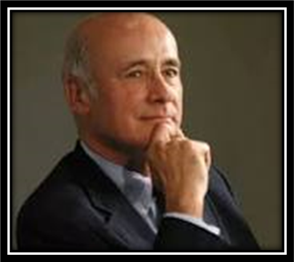
I noted that almost all geopolitical “soft power” explanations draw on the seminal analysis by the (late) Harvard political scientist, Joseph Nye, who promoted the term in his 1990 book Bound to Lead: The Changing Nature of American Power. At that time, Nye wrote, ‘When one country gets other countries to want what it wants (this) might be called co-optive or soft power in contrast with the hard or command power of ordering others to do what it wants.”
About a year later, in the China Daily, I outlined why a continuing rise in Chinese soft power was evident. This article drew on a report in the journal Foreign Affairs about a Yale university survey conducted across a range of developing countries. That university investigation confirmed how a majority of those surveyed – after being given access to increased basic information about China – concluded that the Chinese system was: “more responsive [than the US political model] and better at delivering growth, and, remarkably, more democratic in character” (see: https://www.chinadailyhk.com/hk/article/595383).
Contemporary Developments
Since then, Chinese innovative manufacturing has intensified its pioneering role in so many areas that are both directly and indirectly positive for consumers around the world. Examples include: a pivotal contribution advancing every aspect of green energy infrastructure, remarkable logistics and shipping improvements, affordable EV and regular motor vehicles, and open-source / open-weight, low-cost AI agents - labelled “AI communism” by some, out-paced, sulky Western critics (see: https://www.theguardian.com/technology/2026/jul/20/china-google-ai-race).
China is also still providing a vast range of value-for-money, high-demand consumer goods, including: clothing, toys, hardware, building materials, computers and mobile phones, as well as, at the macro-level, massive tunnel-boring machines (see: https://www.chinadailyhk.com/hk/article/636683).
China has, thus, continued to deliver products and services globally that are steadily and affordably improving the daily lives of millions around the world on a remarkable scale.
And not just in the Global South. UCLA professor, Chris Tang, vividly captured one aspect of this soft power growth in a recent China Daily article entitled: “The power of practical tech: how China is winning global AI race.” Tang’s airport ride after arriving in Paris was in a Chinese EV. The multi-lingual, Romanian immigrant driver said he had recently sold his Mercedes and purchased a BYD Seal because the Chinese EV was cheaper, superior in quality, and far more economical to operate adding that he felt China was doing something that could benefit common people like him (see: https://www.chinadailyhk.com/hk/article/636823).

Benchmark Erosion
When Professor Nye wrote his book on soft power in 1990, the US was the exemplar, in his view, of how to develop and wield such power, and he was surely right about this. The US had a remarkable story to tell about itself, which was linked to exceptional marketing prowess evident in America’s global dominance of every English language media sector.
The basis of America’s soft power ascendency claim has severely deteriorated since then, however. Moreover, no amount of Western political marketing can, today, smother frightful, US-led war-mongering realities in ways that remained possible in the 1990s.
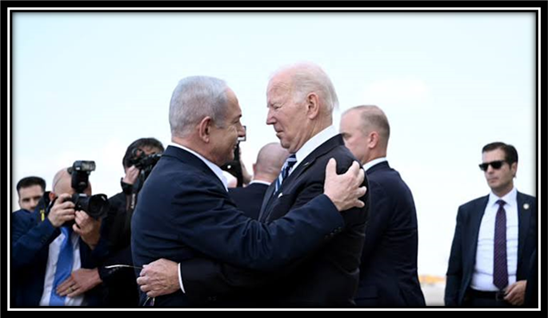
In March this year, I wrote about America’s dismal decade, since 2016, when Donald Trump was first elected as president. I also argued how the foundations for this accelerated adulteration of the American brand were laid by President Obama after 2009 and observed how President Biden had gravely amplified this relapse during his tenure in the White House, exemplified by Biden flying to Israel to hug Prime Minister Benjamin Netanyahu in public as Israel unleashed an unbridled, genocidal attack on Gaza following the fearful Hamas attack on Israel in October, 2023. With that single embrace Biden mortally debased America’s global political credibility (see: https://www.chinadailyhk.com/hk/article/630683).
In May this year, Professor Stephen Walt, from Harvard University, published an article in Foreign Policy arguing how President Trump had impelled “The End of America’s Soft Power,” concluding that “The United States has given up on one of its core international strengths” (see: https://foreignpolicy.com/2026/05/04/trump-soft-power-usa/). Sasha Mudd, writing for Prospect Magazine in the UK, shortly before this, said that “Trump has destroyed American soft power” (see: https://www.prospectmagazine.co.uk/world/united-states/72128/trump-has-destroyed-american-soft-power).
More recently, Professor Robert Pape, from the University of Chicago, described President Trump’s Israeli-guided decision to wage war - yet again - on Iran, in this way: “What a stupid, stupid war,” he said. “Unbelievable, what a dumb, stupid war” (see: https://www.newsmax.com/us/robert-pape-u-s-strikes/2026/08/03/id/1264945/).
Concurrently, writing in the Guardian, Peter Beinart highlighted: “The staggering corruption of Trump’s presidency, and the obscene wealth gap that his policies have helped create” (see: https://www.theguardian.com/commentisfree/2026/aug/05/abdul-el-sayed-democrats-trump).
Soft Power Assessment
Unsurprisingly, most coverage of the growth of China’s soft power discusses how this rise compares with the US soft power benchmark. The present, critical collapse of American soft power observed by a growing number of commentators accordingly works to China’s advantage, today, as the soft power ledger is being squared.
However, as significant as this factor is, the recurrent appreciation of Chinese soft power is far more grounded in China’s exceptional, long-term performance legitimacy, apparent in China and globally.
Here is a fundamental explanation of this remarkable achievement.
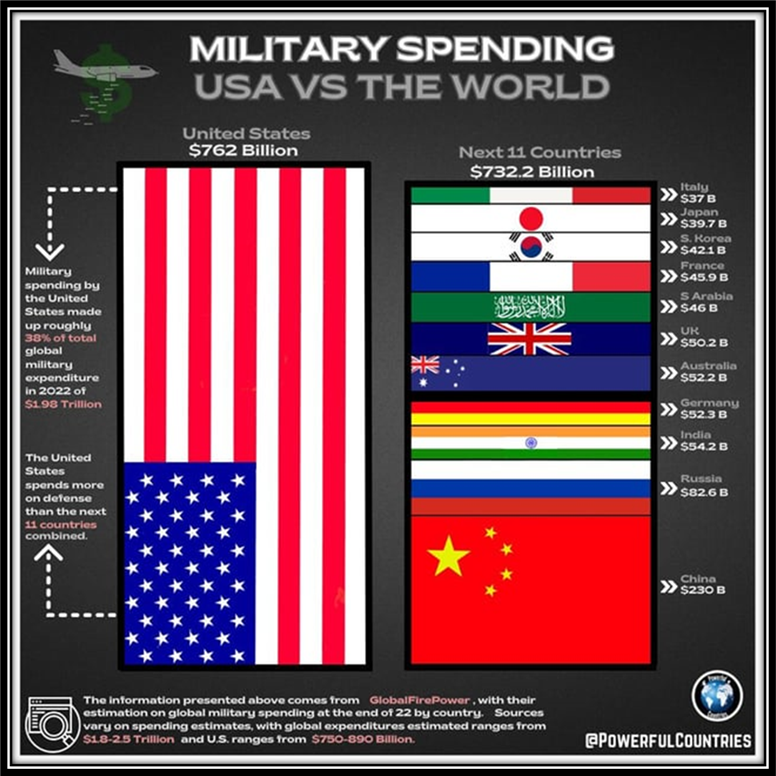
America, with its Gothic military budget greater than the next nine (at least) nations combined and with close to 800 worldwide military bases, has been repeatedly involved in global warfare throughout its history according to President Carter (see: https://www.blackagendareport.com/jimmy-carter-us-most-warlike-nation-history) and more than ever since the end of World War II, especially, horrifically, in the Middle East.
Meanwhile, for decade after decade, the continuous mantra for China has been, “let’s go to work” rather than “let’s go to war.” China has not dropped a single hostile bomb anywhere for decades, as it has lifted over 800 million people out of abject poverty. It has grown to dominate global manufacturing in a manner never seen before seen in world history, covering, for example, shipbuilding, all kinds of vehicles, all aspects of green technology, the widest range of household and recreational items, plus medical necessities and innovations (see: https://michaelwest.com.au/china-or-america-who-is-the-warmonger/).
Then there is the BRI-effect.
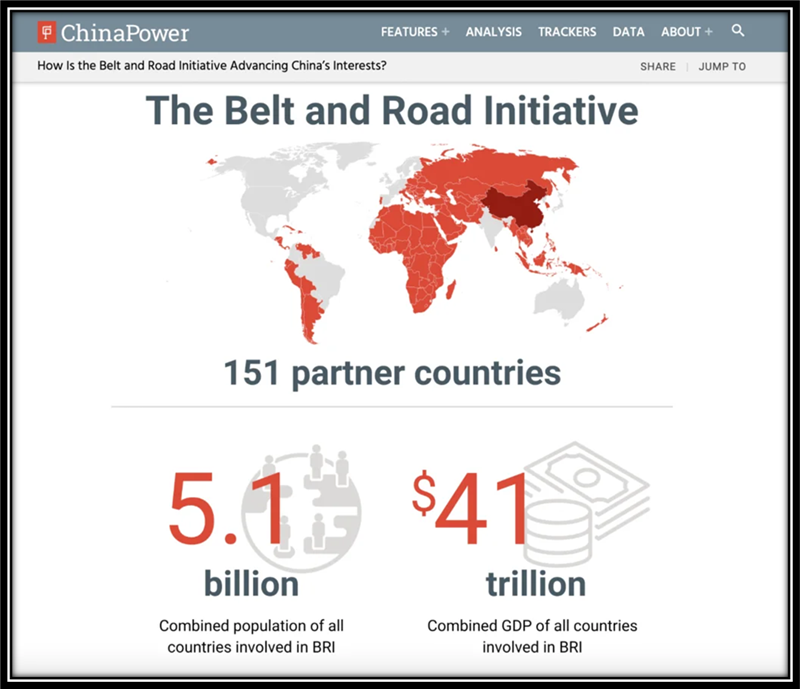
Sir Douglas Flint, former HSBC Chairman declared that China’s Belt and Road Initiative was “one of the biggest, if not the biggest, facilitator” of the achievement of the United Nations Sustainable Development Goals, adding that it had had an “incredibly positive” impact on regional and world development (see: https://fridayeveryday.com/untold-tale-how-the-chinese-diaspora-paved-the-way-for-bri/).
Leading Singaporean commentator, Kishore Mahbubani explained how: “The BRI is bringing real benefits to the Global South. It is striking that the fast train between Jakarta and Bandung (with speeds of up to 350 kilometers per hour) was launched in the very week that Britain (a member of the G7) announced it did not have funds to proceed with the fast train between Birmingham and Manchester. Future historians will mark this as a clear indicator of how times have changed in our world” (see: https://www.chinadailyhk.com/hk/article/595383).
Conclusion
The significant, comparative rise in Chinese soft power looks set to continue. Professor Tang has lucidly explained why: “Ultimately, technological supremacy is not measured by how many raw language models a nation can produce in a laboratory. It is measured by how effectively those innovations improve human life in the real world. By aggressively focusing on technology for good, whether through accessible EVs, practical AI, or labor-saving humanoids, China is building a brand that wins the hearts and minds of the world.”