

This is a slightly revised version of an article recently published by the China Daily (see: https://www.chinadailyhk.com/hk/article/636683).

Exceptional Trade and Alarmist Warnings
Almost 20 years ago, China overtook Japan as Australia’s top trading partner. This Sino-focused trading relationship underpinned Australia’s record-breaking run of recession-free growth from 1991 to 2020.
However, an intensifying China Threat narrative began to emerge in Australia around a decade ago. By 2018, the Turnbull government in Canberra had unwisely banned Huawei (the then best global provider) from participating in the build-out of Australia’s 5G network. Hostile political accusations directed at Beijing from Canberra were subsequently amplified by the Morrison government as the COVID19 pandemic spread.
Next came the “Red Alert” series of orchestrated, willfully alarming media reports in 2023. These claimed that Australia had to be ready to fight China within three years! (See: https://www.abc.net.au/mediawatch/episodes/china/102090318)
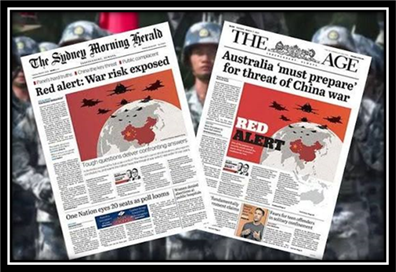
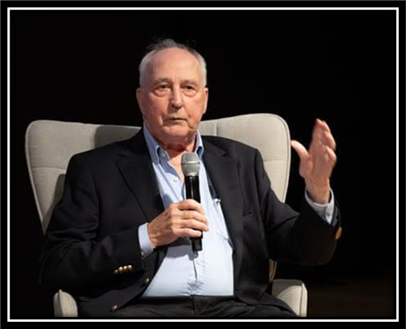
Former Prime Minister, Paul Keating said, at the time, that the primary author involved had been allowed “to concoct a China-threat story aided by a group of handpicked anti-China accomplices, to produce the most egregious and provocative news presentation I have witnessed in over fifty years of active public life”. In 2026, as Australia predictably discovered it was not at war with China, Keating dryly noted, on the three- year anniversary of the original story, that: “None of the claims have materialised” (see: https://www.theguardian.com/media/2026/mar/06/paul-keating-nine-2023-australia-china-war-prediction-red-alert).
Notwithstanding all this mainstream media, anti-China scheming, Australia has continued to run very healthy annual trade surpluses with China, year after year. According to Statista, despite the shrinking value of certain commodity exports, Australia still has the fourth largest trade surplus with China behind Taiwan, South Korea and Brazil (see: https://www.statista.com/chart/35596/countries-regional-economies-with-the-biggest-trade-surpluses-deficits-with-china/?srsltid=AfmBOorx39WrEZYWHXmGRTKE_eUxLA8qmu2uLiQGPtBrDWYj6pdZgJ17).

A Contemporary Synopsis
When you consider the overall report card today on the relationship, Australia’s semi-bi-polar posturing with respect to China continues - almost comically at times.
Recently, the test-firing of a Chinese ICBM into the South Pacific on July 6 - with a dummy warhead - from a Chinese nuclear submarine made headlines across Australia.
Several things are worth noting about this coverage.
Most reports confirmed that advance warning of the test was provided by Beijing and that this notice conformed with established international protocols. But they also stressed flustered follow-on criticism. Thus, the Australian Foreign Minister, Penny Wong, after acknowledging the prior notification, was widely quoted as she claimed that the launch, “lacked the transparency and reassurance that Pacific neighbors expect” adding that she was concerned about “destabilizing acts” (see: https://www.washingtonpost.com/national-security/2026/07/06/china-test-fires-long-range-missile-into-pacific-rattling-us-allies/).
Long-time anti-war activist, Pip Hinman, writing shortly after the Chinese test firing, stressed Australia’s selective concern about “destabilizing acts,” noting how: “Wong was not asked about the scores of nuclear capable missiles the US has fired into the Pacific just over the last decade,” adding that the most recent US test may have been in March this year. Hinman also highlighted the (biennial) 2026 Rim of the Pacific (RIMPAC) maritime war exercises – the world largest - led by the US, involving many countries including Australia and Israel (see: https://www.greenleft.org.au/2026/1458/analysis/australias-selective-outrage-about-missile-tests-pacific).
All of this relevant context is, unsurprisingly, almost completely absent in mainstream Australian reporting of the recent Chinese ICBM test-firing. And forget about finding any reflection on the constant US – and regular Australian – military transits through the Taiwan Strait every year (see: https://www.jpost.com/international/article-887426) .
But it gets better.
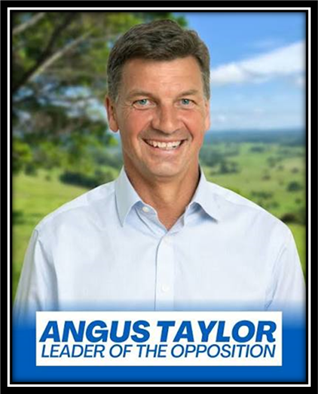
Angus Taylor was elected as leader of the Australian Liberal Party -and thus leader of the official opposition - in February, 2026. This means he is set to become Prime Minister of Australia if he achieves success in the next Australian Federal Election, expected by May, 2028.
Two days after the Chinese ICBM test firing, Telstra, Australia’s largest telecommunications company, suffered a massive lapse in service provision, that disrupted, mobile services, data systems, payments systems, a rail network and emergency services. The problem was triggered by a software defect and certain synchronization failures, according to Telstra (see: https://www.abc.net.au/news/2026-07-10/telstra-warned-about-vulnerability-before-national-outage/106896906).
However, at a press conference soon after, the new opposition leader, Mr Taylor, questioned whether there might be any connection between the Chinese missile test on July 6 and that major Telstra outage two days later, according to The Guardian (see: https://www.theguardian.com/australia-news/2026/jul/08/anika-wells-ridicules-angus-taylor-and-barnaby-joyce-for-linking-telstra-outages-with-china).
Taylor presented zero evidence to support this speculation. Here was Australia’s potential next Prime Minister weirdly wondering aloud about this possibility - like a mischief-making adolescent - presumably hoping to score points by ramping up a fresh aspect of the China Threat narrative. This was an extraordinary intervention. One that provides a frank indication of the acumen of a new, key political leader in Australia once it is time to discuss China.
Pragmatic Engagement
Fortunately, when you move beyond this zone of media amplified, reckless political maneuvering, Australian decision-making related to China is measurably more positive.
Drive.com, one of Australia’s leading automative commentary Websites, lately reported that: “Japanese cars have dominated Australian sales for decades, but now Chinese-built cars have outsold Japanese for five consecutive months.” Drive observed that Japan’s Toyota remained Australia’s leading brand - but only just, “with BYD selling a mere 243 fewer vehicles than Toyota in June.” Popular Chinese brands, apart from BYD, include, MG, Chery and GWM, while nominally Japanese and American EV models selling in Australia (from Mazda and Tesla) are also sourced from China (see: https://www.drive.com.au/news/the-era-of-japanese-cars-might-be-over-in-australia-as-china-surges/). .
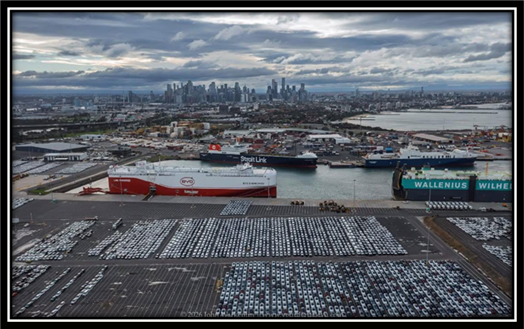
In June this year, the very large, BYD Zhengzhou RORO (Roll-On-Roll-Off) delivery vessel arrived in Melbourne with a cargo of around 5,000 vehicles, with further deliveries planned.
Once we move beyond this retail level to the macro-level, intelligent, local Australian interaction with China is also evident (see:
).
CREG, (China Railway Engineering Equipment Group) is one of the world’s largest manufacturers of huge Tunnel Boring Machines (TBMs). TBMs from CREG have played a crucial role in creating Sydney’s new Western Harbour Tunnel. Meanwhile, four Chinese TBMs are currently working on 26 kilometres of tunnels needed for Melbourne’s major Suburban Rail Loop project (see: https://www.premier.vic.gov.au/more-tbms-coming-china-build-suburban-rail-loop).

The Snowy 2.0 project has been described as Australia’s largest renewable energy project, functioning as a “colossal water battery.” The primary German TBM manufacturer, Herrenknecht, has a key factory in Guangzhou. Herrenknecht and CREG have together delivered a series of giant TBMs to undertake the massive tunnel boring aspects of this monumental venture (see: https://tunnelbuilder.com/News/The-fourth-Snowy-20-TBM-shipped-to-Snowy-Mountains.aspx).
Conclusion
As we reflect on the last 40-plus years, it is clear that the rise of China has been exceptionally good for Australia, while Australia has played a continuing role that has been conspicuously positive for China. Political posturing, especially from Canberra (often at the urging of Washington) has initiated some wobbling in this vital relationship from time to time. But the pragmatic common sense driving the broader relationship has coped well with recurring spasms of negative political choreography.
Fortunately, China has, over an extended period, consistently embraced what Mohamed Sabreen recently described as “a positive vision [of the future] based on cooperation, development and mutual partnership” (see: https://www.chinadailyhk.com/hk/article/636249).
Australia’s actions strongly suggest a similarly shaped, affirmative outlook on what might be achieved, globally, during this new century.
As it happens, Professor Jeffrey Sachs lately reminded us that the founding principles of the US embodied a very similar ethos stressing: “a coherent vision of how a nation should conduct itself in the world: with reason, with restraint and with the awareness that the reasoned opinions of mankind are the proper measure of legitimacy” (see: https://www.chinadailyhk.com/hk/article/636240)
Richard Cullen was previously a professor of law at The University of Hong Kong and Monash University in Australia.