

Whatever doesn’t kill you makes you stronger
This is an extended version of an article recently published in the China Daily (see: https://www.chinadailyasia.com/hk/article/640699).
Introduction
In less than a year, it will be three decades since China resumed the exercise of sovereignty over Hong Kong on July 1, 1997. It did so by applying the One Country Two Systems (OCTS) formula previously developed in its modern form by Deng Xiaoping.
The essence of this concept is to foster unification while respecting established history and certain, prevailing political-economic realities, alongside safeguarding the fundamental interests of the entire Chinese nation (see: https://auckland.china-consulate.gov.cn/eng/zt/twwt/200311/t20031119_230551.htm).
Critics of how OCTS has been applied in Hong Kong are numerous and mainly Western-based. The stridency of this continuous censure intensified following the hugely disruptive insurrection that evolved in Hong Kong from mid-2019 (see: https://www.lowyinstitute.org/the-interpreter/umbrella-movement-20-exposes-flaws-one-country-two-systems).
It is timely, at this point, to consider facts on the ground. In particular, it is instructive to study how the OCTS framework has coped with the continuous stress-testing it has experienced since its initial application in Hong Kong.
Stress-testing begins
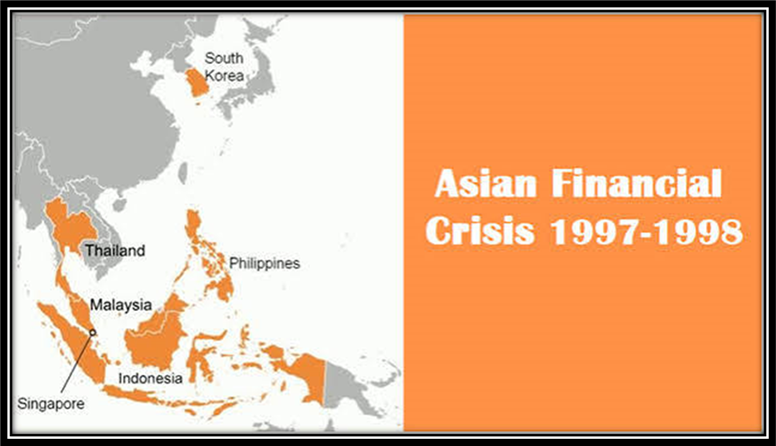
A severe test commenced on day one when the Asian Financial Crisis began following the collapse of the Thai Baht in mid-1997. According to two French economists, eager (then suddenly curtailed) Japanese lending to high growth South East Asian countries combined with lax local regulation were primary factors triggering this crisis (see: https://www.sciencedirect.com/science/article/abs/pii/S0922142508000054).
This financial turmoil soon led to a brazen attack by certain Western speculators on the Hong Kong dollar peg to the US dollar, following which, the new HKSAR government delivered a swift punishing response to the speculators, with crucial support from Beijing (see: https://www.chinadailyhk.com/hk/article/603094).
Over a decade later, direct political pressures, within the SAR, challenging the operation of the OCTS framework began to intensify,
British Hong Kong & One Country Two Systems
The Basic Law of the Hong Kong SAR established the constitutional basis for applying OCTS in Hong Kong. It was enacted by the Nation People’s Congress in 1990 after extended discussions dating back to a pivotal meeting, in Beijing, between Deng Xiaoping and British Prime Minister, Margaret Thatcher, in 1982 that ultimately led to the signing of the Joint Declaration in 1984 (https://www.cmab.gov.hk/en/issues/joint2.htm).
In the post-war era, British Hong Kong was widely applauded for its remarkable “Asian tiger” success, not least by the American economist and Nobel Laureate, Milton Friedman (see: https://www.chinadailyhk.com/hk/article/631846). It is, however, worth recalling some essential features of the British ruling regime that underpinned this admired performance.
From 1842 until 1991, the British ruled Hong Kong without recourse to any tangible form of elected participation in government. Much Western commentary still commonly emphasizes an adverse distinction between what are termed democratic and authoritarian jurisdictions. Using the Western political science tests associated with these terms, Britain ran Hong Kong for almost the entire period of its tenure relying on an (increasingly legalized) authoritarian governance system. The Governor, who formally enjoyed almost unqualified power, was appointed indefinitely. For a very long time the Governor also selected his own Legislative Council (LegCo) (see: https://www.cambridge.org/core/books/abs/authoritarian-legality-in-asia/understanding-authoritarian-legality-in-hong-kong/C9E98DFFDC4A087849F2B005FAADA92D).
Consistent with the OCTS formula, the Basic Law sharply varied this enduring British-shaped governance regime. LegCo was one-third directly elected in 1998 and the Basic Law spelled out an ultimate aim that both the HKSAR Chief Executive and Legislature should be elected by universal suffrage, “in the light of the actual situation in the Hong Kong Special Administrative Region and in accordance with the principle of gradual and orderly progress.”
Stress-testing intensifies
These Basic Law provisions swiftly became the paramount focus of those political groups in Hong Kong most absorbed by the project of expediting radical electoral reform of the political structures that had underpinned almost 150 years of British rule.
After 1997, the pan-democrat camp steadily became almost spellbound by this issue, regularly quarreling within about lack of sufficient commitment to this cause, by one group or another. Attention to many key issues related to people’s livelihood either fell away – or those issues were recast and slanted to serve the transcendent objective of spurring rapid electoral reform.
This powerful, competitive fixation on accelerated electoral reform, come what may, proved to be the source of the most intense stress-tests applied to OCTS.
After the Democratic Party worked constructively with the HKSAR Government and Beijing in 2010 to secure significant further reform of the LegCo electoral system, certain other elements with the pan-democrat circle turned on these reformers, which saw the movement split into two factions according to professor Ma Ngoc (https://www.journalofdemocracy.org/articles/hong-kongs-democrats-divide/). This beneficial reform was secured after a reckless, “de facto referendum” tactic employed by the radical faction fell flat (see: https://sites.google.com/site/mathewyhwong/data/hong-kong-politics-database/-de-facto-referendum-and-the-political-reform).
Radical protest behavior subsequently intensified.
In 2014, Hong Kong was subjected to the Occupy Central protest, which, again demanded rapid, sweeping electoral reform. The movement’s competing leadership factions emphasized they had scant interest in compromise. Severe disruption endured for almost three months. Massive levels of dislocation were imposed on normal life in Hong Kong, especially in primary business areas (see: https://law.nus.edu.sg/projects/occupy-central-for-universal-suffrage-constitutional-development-and-political-reform-in-hong-kong/).
Then, in 2016, came the Lunar New Year violent political protest in Mong Kok. The Economist said it was: “The worst outbreak of rioting since the 1960s. The violence flared amid rumours that officials were trying to clear away unlicensed hawkers selling local delicacies. Reports that some rioters shouted “establish Hong Kong as a country!” suggest that it was about more than fried food.” Of the 120 people injured, 90 were police officers (see: https://www.economist.com/china/2016/02/13/street-violence-and-politics).
The Financial Action Task Force (FATF) of the leading G7 group of countries had urged Hong Kong, in 2008, to reform its visibly inadequate extradition regime. In 2019, the SAR government introduced badly needed extradition reforms. As the government attempted to explain the new bill, the initiative was swiftly reframed (wrongly but successfully) by certain strident media outlets as a fearsome new, freedom-threatening law (see: https://www.chinadailyhk.com/hk/article/159971).
Major anti-bill marches followed. Soon after, organized political violence on a far-reaching, continuous scale began and certain opposition members openly sought offshore support - from the US especially - including intervention to back the growing political upheaval in Hong Kong. On June 12, 2019, a grim political riot vandalized the LegCo building and stopped LegCo from operating completely. This posed a unique threat to the constitutional order.
This swelling political hostility ultimately developed into a gravely destabilizing insurrection which lasted from mid-2019 into the following year.
Even after that unprecedented turmoil was brought under control, militant elements within the opposition remained undeterred. They moved on to a fresh scheme, in 2020, to create fundamental disruption under the so-called 35+ plan. Using a hoped-for opposition majority, they planned to use provisions in the Basic Law (contrary to their proper purpose) to coerce the Government by denying essential funding. This was a key step in provoking a new constitutional and political crisis, where an ultimate laam chau – burn together - outcome was openly visualized.
Meanwhile, Washington had become, by 2017, directly confrontational towards Beijing in its attempt to contain China’s rise. Customary menacing methods were deployed – including now well-documented moral, organizational and financial support for the ongoing insurgency in Hong Kong (see: https://the-reasonable-man.com/posts/nury-vittachi-other-side-story).
During the later British Hong Kong era, although the media and residents could openly criticize the government, they had to do so without directly challenging the constitutional framework of the colonial governance system. When particular governance red lines were crossed, the British moved swiftly and forcefully to restrain such breaches of these “loyal opposition” expectations. They did so, for example, by suspending publications, by charging media operatives, and, in extreme cases, like the political riots in 1967, by applying lethal political force.
The insurrection that gained traction in Hong Kong from mid-2019, confirms how those most implacably opposed to the HKSAR government — and Beijing — had evolved into an openly violent, disloyal opposition. One where the radicals set the agenda. One where they sought to upend the prevailing constitutional order, insisting that only their view of the correct political structures was admissible
No responsible group within the opposition dared to step forward to say that the continuous violence was unconscionable and the insurrection was unsupportable.
Beijing responds
For Beijing, it became unambiguously clear that the political insurgency of 2019 must not be allowed to recur. Furthermore, foreign actors must never, in future, be permitted such a free hand to involve themselves in destabilizing politics in Hong Kong.
At the same time, Beijing remained resolutely committed to supporting the OCTS framework. Exceptional impulse control was displayed in 2019. There was no resort to military force to restore order in Hong Kong.
There was, however, an eventual resort to fundamental, radical legal reform to bolster national security and to restructure LegCo. These needed reforms have been instrumental in restoring stability in the SAR. They also ratified the pivotal importance of OCTS.
This recharged stability enabled Hong Kong’s remarkable, proved capacity to cope with and recover robustly from adverse experiences, to reassert itself.
Rejuvenation indications
Following the 2019 insurgency, a wave of personnel departures from Hong Kong universities and varied professional occupations was evident. Today, five universities in the SAR are ranked in the Top 100 universities worldwide according to a recent report, which described this affirmative change as part of an “historic realignment of academic prowess from West to East” (see: https://www.scmp.com/news/hong-kong/education/article/3369243/5-universities-hong-kong-rank-top-100-historic-shift-west-east).
Hong Kong role as an international financial centre has seen a similar rebound, “reclaiming its spot as the world’s leading initial public offering (IPO) fundraising venue in 2025”, while witnessing total equity fundraising in excess of US$100 billion (see: https://www.chinadailyhk.com/hk/article/640268). It was recently reported that UK, US and Singaporean companies were among the leading sources of inbound foreign capital to Hong Kong in 2026 (see: https://www.scmp.com/news/hong-kong/hong-kong-economy/article/3369494/money-money-us-uk-firms-still-coming-hong-kong-commerce-chief-says).
Meanwhile, the SAR has regained a fully functioning legislature. As I noted last year, the contrast with the previous, vigorously dysfunctional LegCo is stark. We can already see the how this beneficial lift has improved the focus on addressing a range of pivotal livelihood issues, including Hong Kong’s serious housing, aged-care, and healthcare challenges. LegCo is now an institution that is set to play a central role in shaping Hong Kong’s future (see: https://www.chinadailyhk.com/hk/article/624689).
There are many other indications of how well Hong Kong has recovered, including: the confident development of the SAR’s first Five Year Plan, the pivotal Northern Metropolis project, rising visitor numbers, continual infrastructure improvements, and Hong Kong’s elevated, globally-measured, rule-of-law ranking (see: https://worldjusticeproject.org/sites/default/files/documents/Hong%20Kong%20SAR,%20China_1.pdf). .
One exceptional example of Hong Kong’s coping and recovery capacity evident in 2019 confirms why we should not be too surprised by this remarkable range of rejuvenation indicators. According to Bloomberg, insurgency rioters inflicted damage costing over US$200 million on the MTR during that year (see: https://www.bloomberg.com/news/articles/2019-12-05/hong-kong-protests-cost-embattled-mtr-operator-204-million).
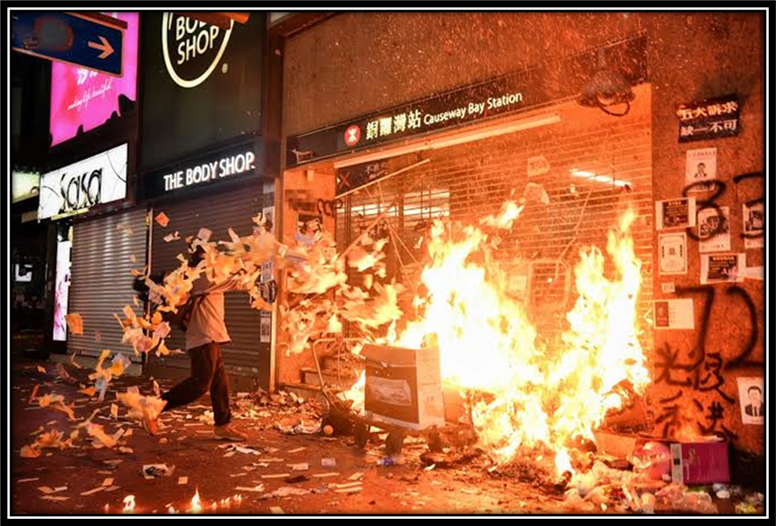
Despite this massive level of system damage, the operator kept the system running throughout almost all of the insurrection period -an extraordinary achievement (see: https://global.chinadaily.com.cn/a/201912/04/WS5de716cba310cf3e3557bdb8.html)
Looking forward
When President Xi Jinping visited Hong Kong on July 1, 2022, to mark the 25th anniversary of China’s resumption over sovereignty over Hong Kong, he applauded the success of the OCTS framework, stressing that: “There is no reason for such a good system to change, and it must be maintained for a long time” (see: https://www.npr.org/2022/07/01/1109272990/xi-defends-vision-of-hong-kong-while-marking-25-year-anniversary-of-handover). He also observed how, “Hong Kong has withstood severe tests again and again, overcoming challenges one by one” (see: https://www.bbc.com/news/world-asia-china-61991980).
Hong Kong’s political-economic journey since 1997 has plainly not been smooth. The SAR would be in a better place today had this experience been less tempestuous. Nevertheless, it is clear that coping with and recovering from all of these challenges has, despite what a range of Western critics may assert, durably strengthened the OCTS framework. This is an outcome which is conspicuously beneficial for both Hong Kong and China as a whole, especially bearing in mind how it is now expected that this framework may apply beyond 2047.