

Liz Truss was dumped as leader of the UK Government in 2022 after less than 50 days in office, following her introduction of a widely condemned mini-budget. Donald Trump’s continuous appalling abuses as a world leader are dramatically more egregious than those attributed to Truss. Yet his tenure as US president remains astonishingly secure. History best explains this dismal difference.
In September 2022, Britain’s latest Prime Minister, Liz Truss, set sail brandishing a reckless economic agenda, which swiftly sent stock and bond markets into a tailspin. Before the end of October, 49 days later, she was prime minister no more.
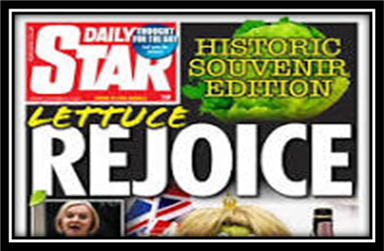
In mid-October, 2022, The Daily Star in London began live-streaming a 60p Tesco iceberg lettuce in the expectation that the lettuce would prove to have a longer shelf-life than the new prime minister. On October 20, 2022, when Truss resigned, the newspaper declared victory for the lettuce. The livestream has now been archived by the British Film Institute (see: https://www.dailystar.co.uk/news/latest-news/daily-stars-famous-lettuce-liz-36094044).
By every possibly measure, President Trump actions, from the outset of his second term, brutally eclipse the reckless behaviour of Liz Truss.
In early 2025, serious commentators around the globe were castigating the rash, new American tariff regime. In April last year, The Economist called Trump the world’s “trade-warmonger in chief” and blamed him for destroying “trillions of dollars in shareholder value” (see: https://www.economist.com/business/2025/04/16/the-trade-war-may-reverse-hong-kongs-commercial-decline).
President Trump’s weird, dangerous, impulsive and repugnant behaviour continues to power ahead on multiple fronts. His passionate, real-life war-mongering has swept homicidally around the globe from Latin America to the Middle East. He has convinced the majority of the global population that he now leads the world’s paramount hoodlum democracy (see: https://www.chinadailyhk.com/hk/article/630683).
And then, on February 28, this year, Trump launched a grotesquely destructive war-of-choice on Iran – in conjunction with and influenced by Israel (see: https://www.nytimes.com/2026/04/07/us/politics/trump-iran-war.html). On day one, the US bombed an Iranian primary school killing over 100 young girls, according to Amnesty International (see: https://www.amnesty.org/en/latest/news/2026/03/usa-iran-those-responsible-for-deadly-and-unlawful-us-strike-on-school-that-killed-over-100-children-must-be-held-accountable/) .
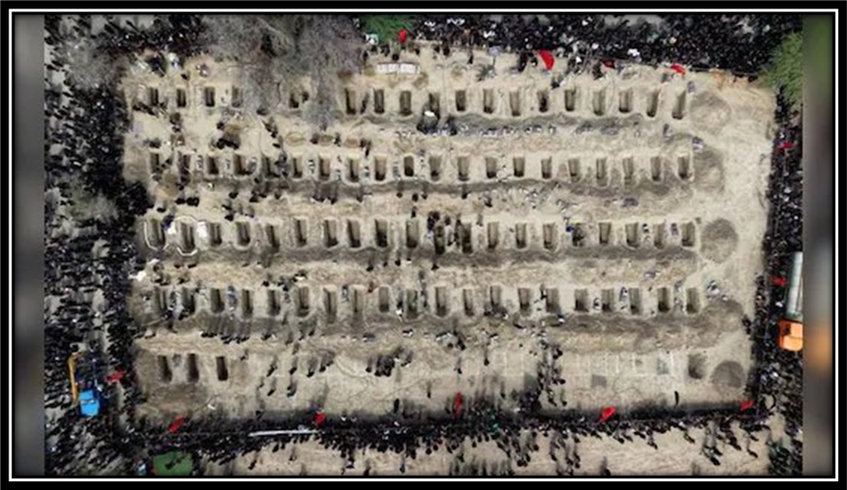
Professor Robert Pape from the University of Chicago, a prominent political scientist who studies international security affairs, recently argued that Trump has “doomed” the US with his war in Iran - see:
And yet, his White House tenure remains conspicuously durable. How can this be?
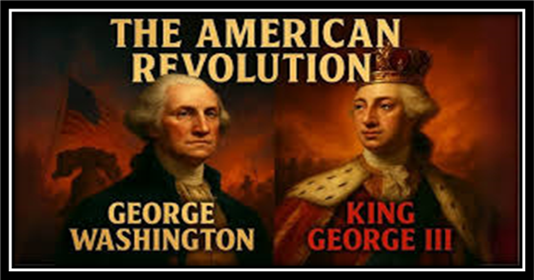
In 1763, Britain won the Seven Years’ War but at considerable financial cost. Britain began imposing new taxes, including in its North American colonies, triggering the American Revolutionary War. The British were defeated and the Treaty of Paris in 1783 confirmed the independence of what was to become the United States of America.
The new US Constitution was ratified in 1788. Although this was in many ways a radical constitution it is also a notably derivative constitution because its written structure replicates fundamental provisions of the unwritten British constitution that applied in 1788 during the reign of King George III.
That unwritten British constitution embodied a paramount executive government, ultimately led by the king. The bicameral parliament in Westminster retained its primary, separate function of enacting the laws. Combined with these two fundamental bases of political power was Britain’s judiciary.
This, then, was the pivotal blueprint for the system of separate powers embodied in the US Constitution of 1788 that applies to this day. No new monarchy was created, of course, but the constitution did create a distinct executive government, outside of the legislature, headed by the president. The bicameral US Congress, was established as a separate lawmaking body and the new US Supreme Court headed the separate American judicial system.
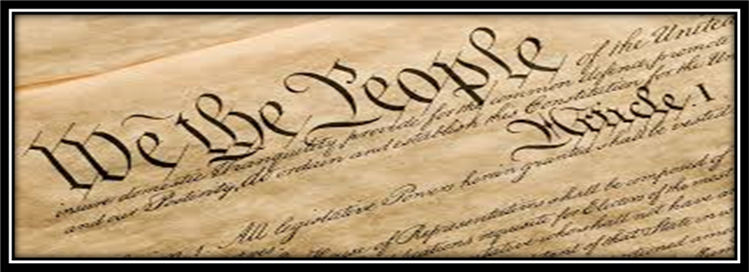
Most importantly, the presidential term of office was stipulated in the constitution: Article II, Section 1, Clause 1 states that the executive power shall be vested in a president, who “shall hold his office during the term of four years”. And the US Constitution is extremely difficult to amend.
Following the death of King George III - and bearing in mind Britain’s loss in the American Revolutionary War – the project to transfer all substantial political power from the British Monarchy to the parliament at Westminster intensified. By the time Queen Victoria came to the throne in 1837, this transfer was largely complete.
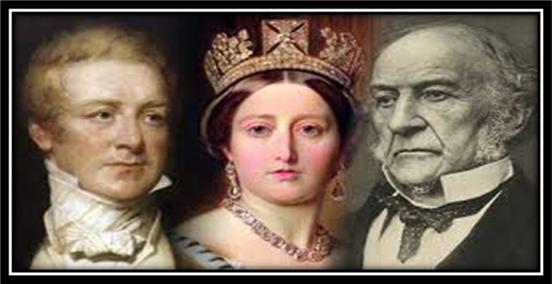
The now radically revised — but still unwritten — British constitution stipulated, using powerful “constitutional conventions” that, first, the seat of Britain’s executive government would henceforth be within the British parliament. Second, that the government would be headed by the prime minister, who along with all other ministers, must be members of the British parliament. Third, only a prime minister who could command consistent majority support in the lower house, the House of Commons, could retain government.
This fundamental mechanism explains why Liz Truss fell so precipitously from power. Within less than 50 days she had lost the confidence of the parliament, the public and, most significantly, her own Conservative Party. She was swiftly forced to resign as prime minister (see: https://www.chinadailyhk.com/hk/article/613659).
It is unthinkable that a primary UK leader replicating Trump’s level of continuous damaging and outrageous behavior could survive and thrive, as President Trump does in America.
President Trump’s assured tenure until early 2029 is, thus, sourced in America’s antique constitution, drafted many decades before parliamentary government was fully developed in the UK.
Meanwhile, we have seen an intensifying stream of medical and media commentary that President Trump is mentally unfit for office. The New York Times lately reported how former Trump allies and advisors are now saying he is “insane” (see: https://www.nytimes.com/2026/04/13/us/politics/trump-mental-fitness-25th-amendment.html?unlocked_article_code=1.alA.lzaX.Df4usxZ1EhHK&smid=url-share)
This has led to calls to invoke the 25th Amendment to the US Constitution. This provision allows, inter alia, for the replacement of the president if he is unable to discharge his duties. The central problem is that, in essence, it cannot be applied so long as Donald Trump believes he remains able (see: https://www.brennancenter.org/our-work/analysis-opinion/unworkable-amendment).
In other words (drawing on some vivid British imagery) no matter how delusional a presidential lettuce may be, a four-year shelf life is locked in by the constitution. America and the world are presently living with the consequences.