

The Allure of Books
Introduction
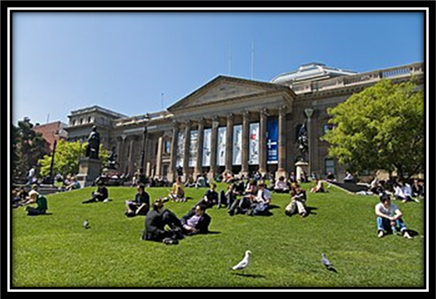
The State Library of Victoria (SLV) in Melbourne was established in 1853. It is Australia’s oldest and busiest public library. It was one of the first free public libraries worldwide. It attracts over 2 million visitors each year (see: https://www.slv.vic.gov.au/interact-with-us/media-centre/state-library-victoria-now-third-busiest-public-library-world).
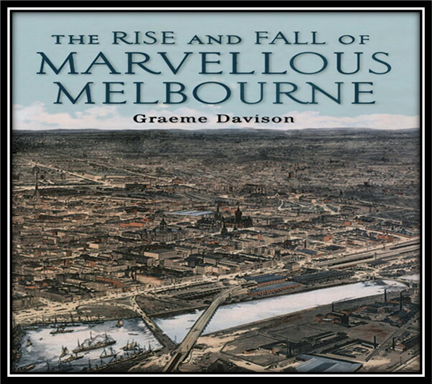
The massive Victorian Gold Rush began in 1851 prompting an extraordinary population and building boom. In the 1850s, the colony of Victoria was producing around one-third of all global gold. This helped support the establishment of the Melbourne Public Library (which later became the SLV) in the same year the University of Melbourne was founded (see https://resources.vic.gov.au/geology-and-data/minerals/metals/gold/gold-mining-in-victoria).
Location
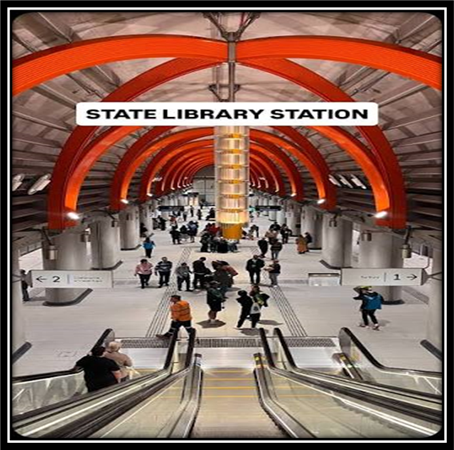
The SLV has retained its original location, on the corner of Swanston and La Trobe Streets, in the Central Business District (CBD). Ten different tram routes pass close to its main entrance and it now has its own new Metro Station.
Facilities
Apart from four major public holidays, the SLV is open to the public, free of charge, every day of the year from 10 am to 6 pm. The facilities for visitors are excellent and those for readers are outstanding. The range of reading, study and hobby areas make it user friendly.
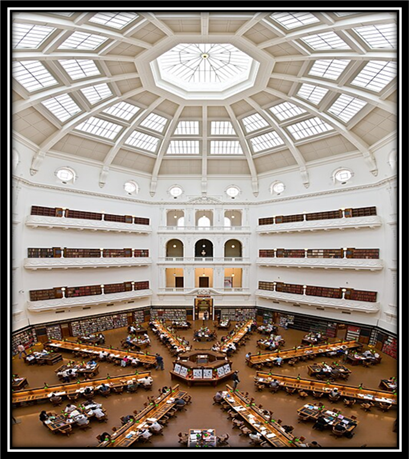
The La Trobe Reading Room (opened in 1913) - once known as the Domed Reading Room – is superb. It retains traditional, large individual wooden-desk reading spaces, with oak chairs, housed under a huge central skylight located in a six-storey concrete dome. It can accommodate up to 320 readers at a time in a room holding over 30,000 books (see: https://www.slv.vic.gov.au/visit/our-magnificent-spaces/la-trobe-reading-room).
Visitors
The nature of visitors and readers was strikingly evident on a recent Sunday visit. My rough estimate was that over 70% were East Asian. Less than 10% of the population in Melbourne identify as having Chinese ancestry.
The SLV is close to Melbourne’s large Chinatown and many at the SLV were tourists. But there were still very few true-blues attracted to taking social-media-snaps featuring a huge book collection in the background.
The SLV - and its surrounds - are marvellously maintained. It is credit to all those looking after its operation. Those in charge must be particularly pleased that new waves of immigrants over the last several decades have discovered the SLV’s exceptional bookish charm and how it is an easily accessible, first-rate place to study.
Given its location in the CBD, it is very handy for bookworms who also love shopping.
A Man Who Believed in Libraries
Ray Bradbury, the noted American science-fiction writer, died in 2012, aged 91. His best-known work (made into a 1960s) film, was, Fahrenheit 451.
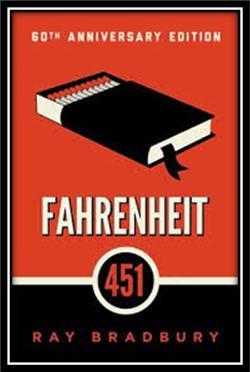
The book was first published as a novel in 1953 and the film, starring Julie Christie and Oskar Werner, was released in 1966 (see: https://mubi.com/en/films/fahrenheit-451/trailer).
The title refers to the temperature at which paper ignites. This futuristic dystopian novel presented a world which featured organized hostility to books and reading.
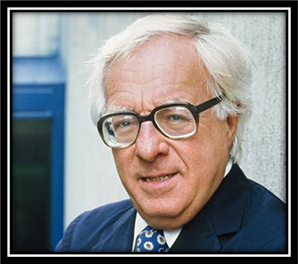
Bradbury was a passionate believer in and supporter of public libraries. He explained that, coming from an impoverished family, he had essentially self-educated himself during the Depression, after finishing High School, by spending an immense amount of time in public libraries. He wrote sections of Fahrenheit 451 in the UCLA Library basement (see: https://www.facebook.com/GoodwillLibrarian/posts/ray-bradbury-loved-libraries-so-much-he-credited-them-with-his-educationhe-spent/1515702509949857/).
Bradbury was investigated by the FBI during the 1950s for alleged “communist sympathies” (see: https://www.theguardian.com/books/2012/aug/30/ray-bradbury-investigated-fbi). He worked tirelessly to support the cause of public libraries and he was, for a time, robustly opposed to the growth of the Internet, which he perceived as threatening the best sort of reading habits (see: https://www.theguardian.com/books/2009/jun/22/ray-bradbury-defends-libraries).
Bradbury would surely applaud the remarkable, contemporary public support for the SLV.
Keeping an open mind
Sir Redmond Barry was an Anglo-Irish lawyer who migrated to Melbourne in the late 1830s. He subsequently became a Victorian Supreme Court judge. He was instrumental in helping found both the SLV and Melbourne University (see: https://en.wikipedia.org/wiki/Redmond_Barry) .
An imposing statue of Redmond Barry stands directly outside the SLV, where his critical contribution to its creation is noted.
![Gilbert & Ball Redmond Barry 1887 {1887} SLV [SC] - Before Felton](https://substackcdn.com/image/fetch/$s_!ff0n!,f_auto,q_auto:good,fl_progressive:steep/https%3A%2F%2Fsubstack-post-media.s3.amazonaws.com%2Fpublic%2Fimages%2F7922fa66-c8c0-44d4-b7f0-1196a803c3e8_406x636.png "Gilbert & Ball Redmond Barry 1887 {1887} SLV [SC] - Before Felton")
Barry’s reputation has been continuously intertwined with that of Australia’s best-known bushranger (outlaw) Ned Kelly. Barry sentenced Kelly to death. As one writer observed: “This is the stuff of myth-making: the pompous Supreme Court judge cursed by the fearless bushranger - I will see you there when I go - (or words to that effect), only [for Barry] to die 12 days later of ‘congestion of the lungs and a carbuncle in the neck’” (see: https://residentjudge.com/2009/02/04/redmond-barry-an-anglo-irish-australian-by-ann-galbally/).
One of the reasons for Kelly’s lasting fame is that he created a suit of armour for himself to wear when he confronted the Victoria Police at Glenrowan in 1880. One of the SLV’s prized exhibits is that celebrated armour.
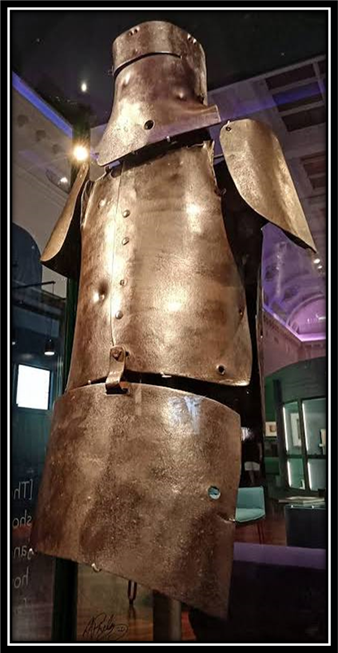
It is on display in the SLV’s Redmond Barry Reading Room (see: https://www.slv.vic.gov.au/whats-on/ned-kellys-armour).